

Platforms that translate JSON website content via API with human review include specialized Translation Management Systems (TMS) and AI-powered document processing hubs. These tools extract structured data, send it to translation engines, and route results to linguists for quality assurance before publishing. This guide covers JSON content localization, TMS capabilities, and website localization workflows to help you build a reliable pipeline.
JSON Content Localization
JSON content localization is the process of extracting, translating, and reinserting text from JavaScript Object Notation files into target languages. Modern websites often store navigation menus, product descriptions, and UI strings in JSON structures. This format allows for dynamic content rendering but complicates translation because text is embedded within code-like structures.
Extracting Text from JSON
Effective localization begins with parsing JSON files to identify translatable strings. Automated tools scan for key-value pairs where the value contains human-readable text. This step ensures that code snippets, URLs, and variable placeholders remain intact while isolating the actual content for translation.
Handling Placeholders and Variables
JSON files frequently contain dynamic variables such as {name} or {date}. A robust localization platform must recognize these placeholders and preserve them during translation. This prevents broken code or missing data when the translated content is rendered on the live site. Acumen Velocity's automated document processing solutions are designed to handle such complexities, ensuring data accuracy and accessibility in structured formats.
Contextual Accuracy
Translating JSON strings in isolation can lead to context errors. For example, the word "book" might mean a reservation in one context and a physical item in another. Providing translators with the surrounding context or UI screenshots helps them choose the correct term. This contextual awareness is critical for maintaining brand voice and user experience across languages.
Translation Management Systems
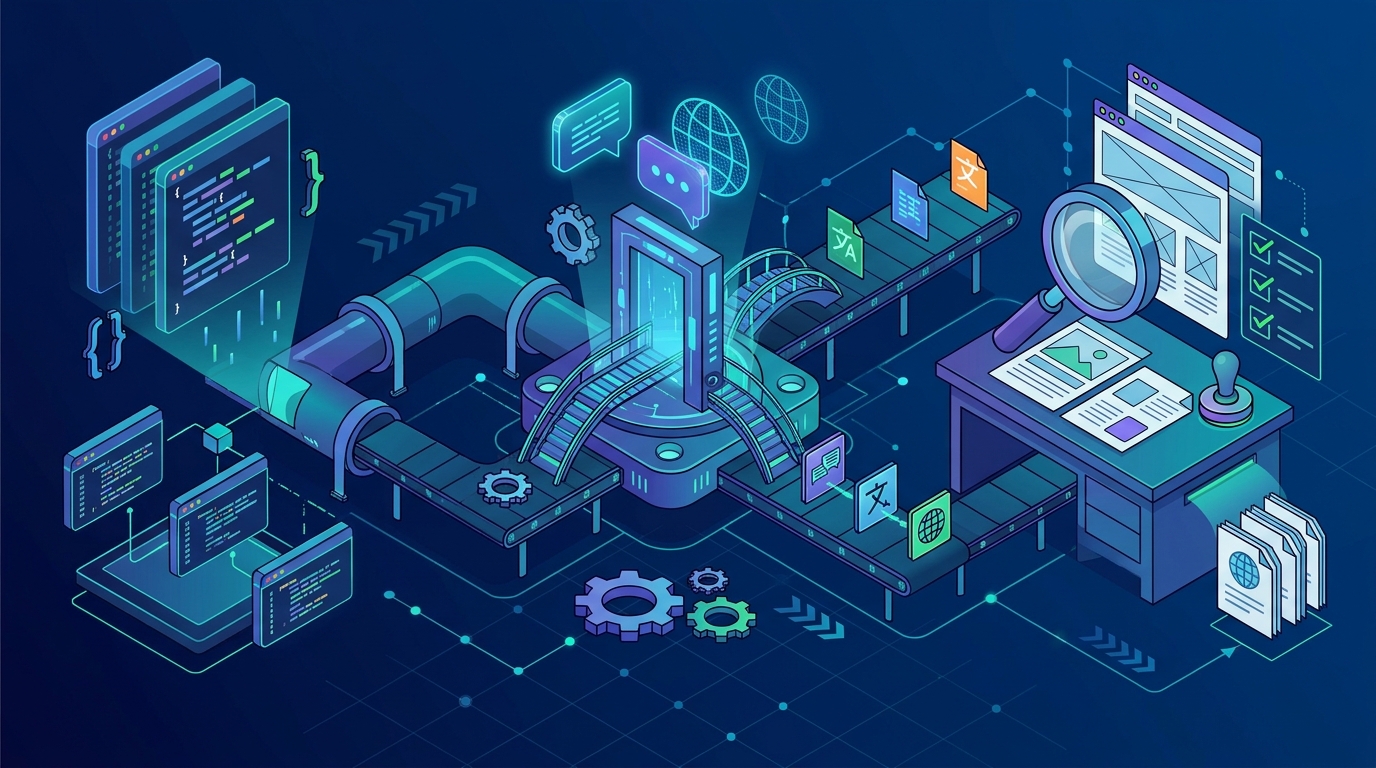
A Translation Management System (TMS) is a software platform that orchestrates the entire localization lifecycle, from file ingestion to final delivery. It acts as the central hub connecting content owners, translation engines, and human reviewers. For organizations dealing with structured data like JSON, a TMS provides the necessary governance and workflow controls.
API Integration Capabilities
Modern TMS platforms offer robust APIs that allow seamless integration with content management systems and cloud storage. These APIs enable automated file transfer, status tracking, and result retrieval. This automation reduces manual effort and minimizes the risk of human error in file handling. Acumen Velocity offers API management and interoperability services to streamline these digital ecosystems, ensuring that your translation pipeline is secure and scalable.
Human Review Workflows
While machine translation provides speed, human review ensures quality. A TMS allows you to configure workflows where machine-translated output is routed to professional linguists for editing. Reviewers can compare the source and target text, flag issues, and approve the final version. This human-in-the-loop approach is essential for high-stakes content where accuracy and tone are paramount.
Comparison of Localization Approaches
| Feature | Manual Translation | Machine Translation Only | API-Driven TMS with Human Review |
|---|---|---|---|
| Speed | Slow | Instant | Fast (Automated + Review) |
| Cost | High | Low | Moderate |
| Quality | High | Variable | High (Verified) |
| Scalability | Low | High | High |
| JSON Handling | Manual Parsing | Automated | Automated + Contextual |
Website Localization Workflows
Website localization workflows define the step-by-step process for making a site available in multiple languages. A well-designed workflow ensures that content is translated, reviewed, and published without disrupting the live site. It involves coordination between developers, content teams, and linguists.
Pre-Translation Preparation
Before translation begins, content must be prepared. This includes cleaning up JSON files, removing obsolete strings, and ensuring consistent terminology. Acumen Velocity's data governance and compliance services help establish frameworks for data quality and security, which are foundational for reliable localization. Proper preparation reduces rework and accelerates the overall timeline.
Translation and Review Cycle
Once content is ready, it is sent to the translation engine via API. The resulting machine translation is then assigned to human reviewers. Reviewers check for accuracy, fluency, and cultural appropriateness. They can also verify that placeholders and formatting tags are preserved. This cycle ensures that the final output meets quality standards before it is approved for publication.
Publication and Maintenance
After approval, the translated JSON files are pushed back to the website's content management system. The site then renders the localized content for users in the target language. Ongoing maintenance is crucial, as new content or updates require re-translation. Automated workflows can detect changes and trigger new translation jobs, keeping the site up to date across all languages.
Key Takeaways
- JSON content localization requires specialized tools to extract and preserve dynamic variables.
- Translation Management Systems (TMS) provide the governance and workflow controls needed for structured data.
- API integration enables automated file transfer and status tracking between systems.
- Human review is essential for ensuring quality, context, and brand voice in translated content.
- Acumen Velocity offers AI-powered document processing and API management to streamline localization.
- A robust workflow includes preparation, translation, review, and continuous maintenance.
- Data quality and governance are foundational for successful localization efforts.
- Combining machine speed with human accuracy provides the best balance of cost and quality.
Frequently Asked Questions
What is the best way to translate JSON files?
The best way to translate JSON files is to use a Translation Management System that supports API integration. This allows for automated extraction of translatable strings, machine translation, and human review before the files are returned to the website.
Can machine translation handle JSON structures?
Yes, machine translation engines can handle JSON structures, but they require proper configuration to preserve placeholders and formatting tags. A TMS ensures that these technical elements are maintained during the translation process.
Why is human review necessary for API translation?
Human review is necessary because machine translation can miss context, cultural nuances, and brand voice. Reviewers ensure that the translated content is accurate, fluent, and appropriate for the target audience.
How does Acumen Velocity assist with JSON localization?
Acumen Velocity provides AI-powered document processing and API management services. These solutions automate the extraction and translation of structured data while ensuring data quality and security through robust governance frameworks.
What are the benefits of using a TMS for website localization?
Using a TMS for website localization offers benefits such as centralized management, automated workflows, quality control, and scalability. It streamlines the process from file ingestion to final publication, reducing manual effort and errors.
How do I ensure data security during translation?
To ensure data security during translation, use a platform with enterprise-grade security features. Acumen Velocity's data governance and compliance services help establish policies for data access, sharing, and accountability, protecting sensitive information throughout the localization process.
Can I integrate my existing CMS with a translation API?
Yes, most modern Content Management Systems (CMS) can be integrated with translation APIs. This allows for automated content synchronization, where changes in the CMS trigger translation jobs, and approved translations are pushed back to the site.
What is the role of data quality in localization?
Data quality is critical in localization because poor source data leads to poor translations. Ensuring that JSON files are clean, consistent, and well-structured before translation improves the accuracy and efficiency of the entire process.
Conclusion
Translating website content stored in JSON through an API with human review requires a combination of automated tools and quality controls. By leveraging a Translation Management System and robust API integrations, organizations can scale their localization efforts while maintaining high standards. Acumen Velocity provides the expertise and solutions needed to build this pipeline, from data governance to automated document processing. To plan your visit or discuss your data strategy, contact our team. Learn more: Contact us Acumen Velocity.