

Language access compliance is the practice of ensuring that government agencies provide meaningful communication to residents with Limited English Proficiency (LEP). For state and local agencies, this is not just a courtesy; it is a legal mandate under Title VI of the Civil Rights Act. Acumen Velocity helps agencies navigate these complex requirements by integrating AI-driven translation and data governance tools into their existing workflows. This guide outlines seven essential tools that keep your agency compliant while improving resident satisfaction.
1. AI-Powered Document Translation Platforms
Automate high-volume document translation with accuracy. Many agencies struggle with the sheer volume of forms, notices, and public records that require translation. AI-powered platforms can process these documents at scale, ensuring that critical information reaches LEP residents in their preferred language. These tools use machine learning to maintain context and tone, reducing the risk of misinterpretation in legal or administrative documents.
2. Real-Time Interpretation Services
Bridge the gap in live interactions with instant interpretation. Compliance is not limited to written materials; it extends to face-to-face and phone interactions. Real-time interpretation tools, including video remote interpreting (VRI) and phone-based services, allow agency staff to communicate effectively with residents who speak languages other than English. Integrating these services into your customer support channels ensures that no resident is excluded from essential services due to language barriers.
3. Data Governance and Compliance Frameworks
Ensure that translated data remains secure and accurate. Data governance is the set of processes that ensure data quality, security, and compliance. When agencies translate data, they must maintain the integrity of the original information. Acumen Velocity provides Data Governance & Compliance services that help agencies establish frameworks for managing multilingual data. This ensures that translated records are traceable, secure, and compliant with privacy regulations.
4. Multilingual Website and Portal Management
Make digital services accessible to all residents. A compliant agency must ensure that its digital presence is accessible. Multilingual website management tools allow agencies to maintain synchronized translations across their web properties. These tools often include content management systems (CMS) that update translations automatically when source content changes. This reduces the burden on staff and ensures that online services are always up to date and compliant.
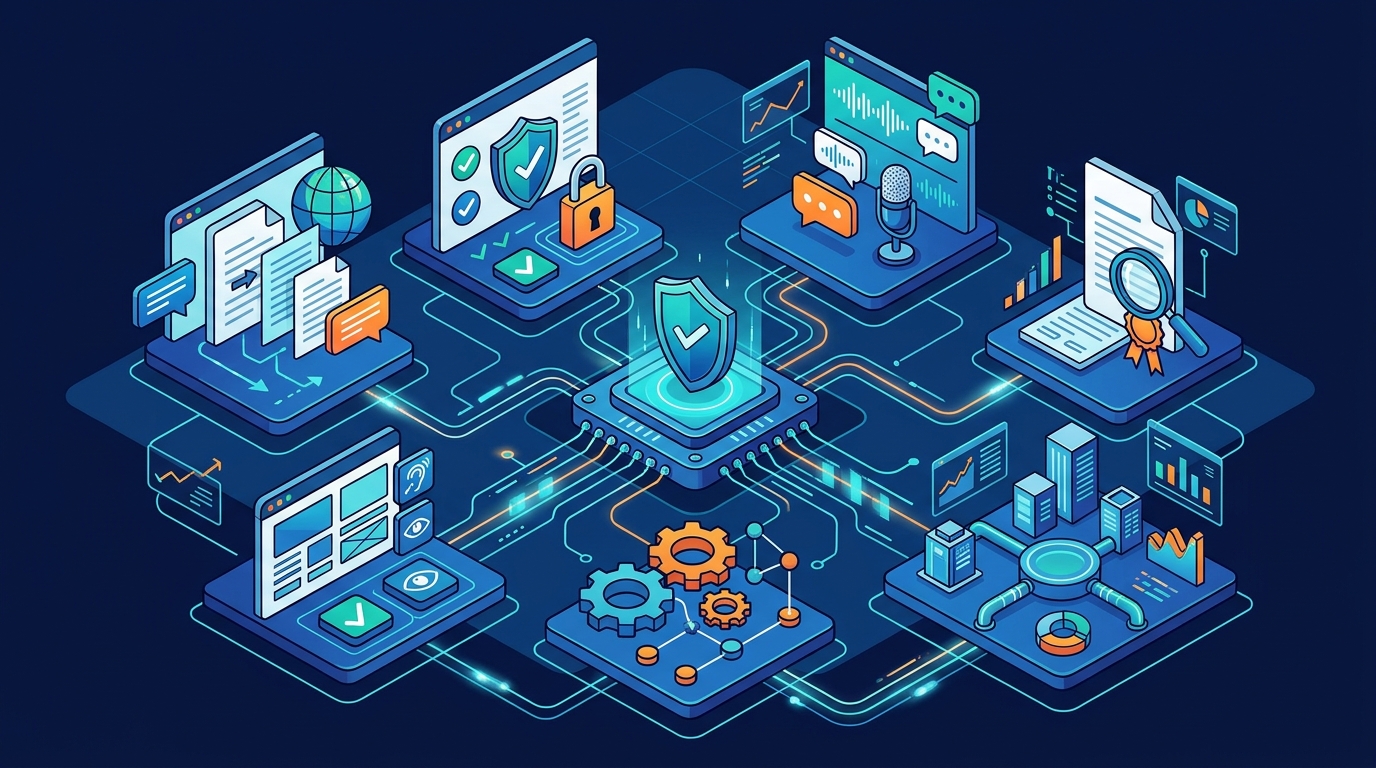
5. Language Access Policy Management Software
Centralize and track compliance efforts across departments. Language access policy management software helps agencies track their compliance status, audit translation workflows, and report on language access metrics. These tools provide a centralized dashboard where administrators can monitor which documents have been translated, which languages are covered, and where gaps exist. This visibility is crucial for demonstrating compliance during audits or legal reviews.
6. AI-Driven Data Integration and Migration
Unify multilingual data sources into a single platform. Agencies often store data in disparate systems, making it difficult to manage translations consistently. AI-driven data integration tools can migrate and unify this data into a centralized platform. Acumen Velocity offers Data Architecture & Integration services that help agencies build scalable architectures capable of handling multilingual data. This ensures that all data, regardless of language, is accessible and usable for analytics and reporting.
7. Automated Quality Assurance and Monitoring
Continuously monitor translation quality and compliance. Automated QA tools can scan translated content for errors, inconsistencies, and compliance issues. These tools use natural language processing (NLP) to detect potential problems that human reviewers might miss. By implementing automated QA, agencies can maintain high standards of translation quality and ensure that their language access programs are effective and compliant.
Choosing the Right Tool for Your Agency
When selecting tools for language access compliance, prioritize solutions that integrate seamlessly with your existing data infrastructure. Look for tools that offer scalability, security, and ease of use. Acumen Velocity can help you assess your current data landscape and recommend the right combination of tools to meet your compliance goals. To plan your visit, contact our team to discuss how we can help your agency achieve language access compliance.
Frequently Asked Questions
What is language access compliance?
Language access compliance is the legal requirement for government agencies to provide meaningful communication to residents with Limited English Proficiency. It ensures that LEP individuals have equal access to services and information.
Why is data governance important for language access?
Data governance is important for language access because it ensures that translated data remains accurate, secure, and compliant with privacy regulations. It provides a framework for managing multilingual data effectively.
How can AI improve language access compliance?
AI can improve language access compliance by automating translation processes, ensuring consistency, and reducing the time and cost associated with manual translation. It can also help identify gaps in language access programs.
What are the benefits of using AI-powered translation tools?
The benefits of using AI-powered translation tools include increased speed, scalability, and cost-effectiveness. They can handle high volumes of documents and ensure that translations are consistent and accurate.
How does Acumen Velocity help with language access compliance?
Acumen Velocity helps with language access compliance by providing data governance, integration, and AI-driven solutions that ensure multilingual data is managed effectively. We help agencies build scalable architectures and implement automated QA processes.
What is the role of data integration in language access?
Data integration plays a crucial role in language access by unifying multilingual data sources into a single platform. This ensures that all data, regardless of language, is accessible and usable for analytics and reporting.