

Organizations often struggle to see the full cost of their AI initiatives because tools are scattered across departments. Acumen Velocity helps enterprises consolidate these costs into a single, governed view. This listicle outlines seven key capabilities and approaches for tracking AI spending effectively.
1. Unified Model Access Hubs
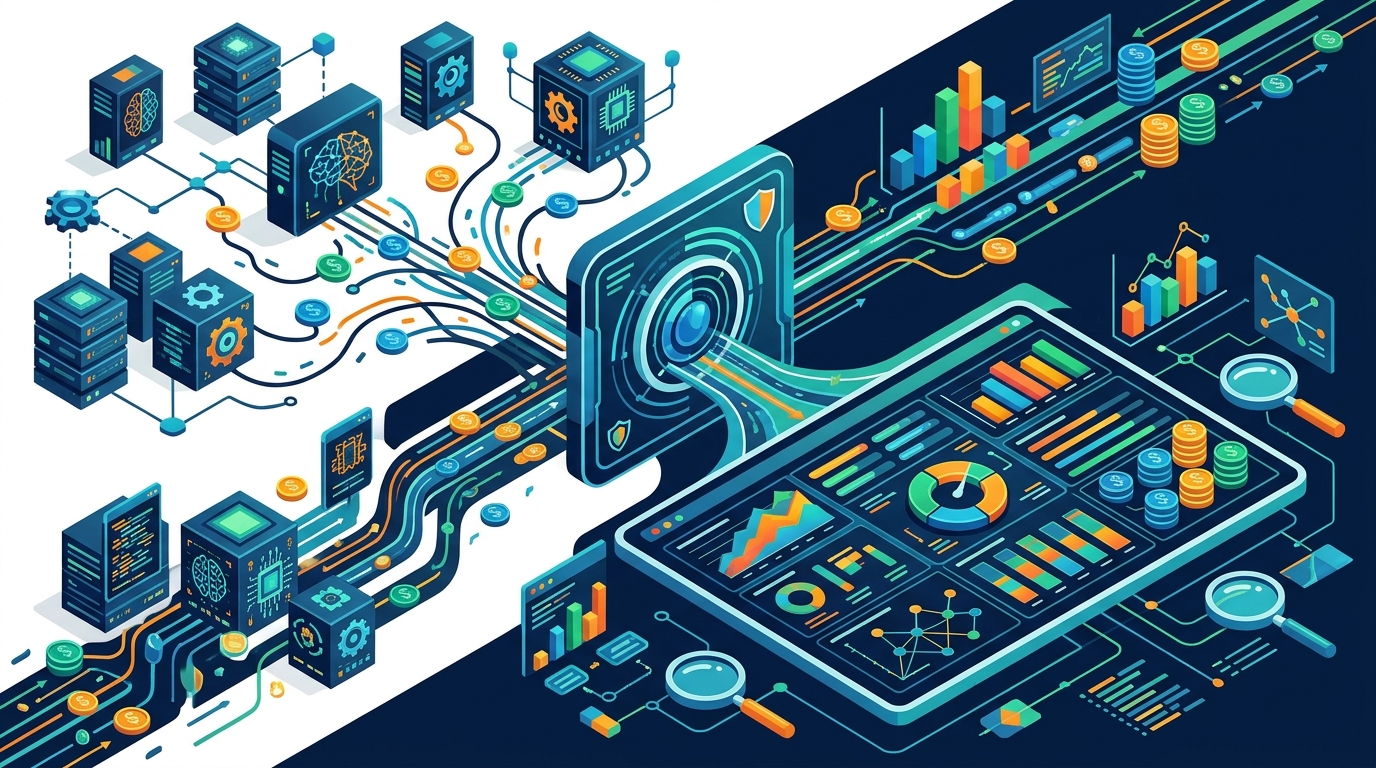
Centralize access to prevent fragmented billing. A unified model access hub is a secure workspace that routes requests to various AI models through a single interface. By consolidating access, IT teams can see usage and cost by department rather than chasing individual vendor invoices. Acumen Velocity's AI Workbench provides this governed access, ensuring that every request is logged and attributed correctly.
2. Automated Model Routing
Match task complexity to model cost. Automated model routing is a mechanism that directs routine tasks to lower-cost models while reserving premium models for complex queries. This approach significantly reduces token costs by avoiding the use of expensive top-tier models for simple requests. Implementing routing logic ensures that your budget aligns with actual value delivered.
3. Departmental Chargeback Reporting
Allocate costs to the teams that use them. Departmental chargeback reporting is a financial practice that assigns AI usage costs to specific business units. This transparency allows finance teams to understand which departments drive the highest consumption. It enables leaders to make informed decisions about budget allocation and resource planning.
4. Single Contract Aggregation
Simplify procurement with one vendor relationship. Single contract aggregation is a strategy where an organization signs one agreement to access multiple AI models. This reduces administrative overhead and often secures better negotiated rates compared to individual subscriptions. It streamlines the procurement process and provides a single bill for all AI services.
5. Usage-Based Roadmapping
Plan future budgets based on real data. Usage-based roadmapping is a strategic process that uses historical consumption data to forecast future needs. Instead of guessing, leaders can see what each department actually uses AI for and plan the next 12 months accordingly. This data-driven approach prevents budget overruns and underutilization.
6. Secure Tenant Isolation
Protect data while tracking usage. Secure tenant isolation is an architectural design that keeps an organization's data and context separate from other users. This ensures that while you track spending, your proprietary data remains secure and owned by your organization. It is a critical component of any robust AI governance framework.
7. Pilot-First Deployment
Validate costs before full-scale rollout. Pilot-first deployment is a phased approach that tests AI tools with a small group before expanding. This allows organizations to measure actual usage and costs in a controlled environment. It reduces the risk of unexpected expenses when scaling to the entire workforce.
When choosing among these capabilities, prioritize solutions that offer both visibility and control. The best platform will not only show you what you are spending but also help you optimize that spend through routing and governance.
Frequently Asked Questions
How does AI Workbench track spending?
AI Workbench tracks spending by routing all requests through a central hub. It logs usage by department and model, providing detailed reports that IT and finance teams can use for chargeback and budgeting.
Can I use multiple AI models with one contract?
Yes, platforms like AI Workbench allow you to access models from various providers through a single contract. This simplifies billing and often results in lower rates due to aggregated usage.
What is the benefit of model routing?
Model routing saves money by sending simple tasks to cheaper models. It ensures that expensive, high-performance models are only used when necessary, optimizing your overall AI budget.
How do I start tracking AI costs?
Start by auditing your current AI subscriptions and usage. Then, implement a central hub that can aggregate this data. A pilot program with a small team can help you establish baselines before full deployment.
Is my data secure in a multi-model environment?
Yes, secure tenant isolation ensures that your data and context remain within your organization's control. This prevents data leakage and maintains compliance while you use various AI models.
How long does a pilot take?
A typical pilot lasts about two months. This period allows you to gather enough usage data to understand patterns and costs before committing to a larger rollout.