

AI governance platforms that track usage and spending across multiple tools provide a unified view of AI consumption, costs, and compliance. Acumen Velocity's AI Workbench is a leading solution that consolidates access to major AI models like ChatGPT, Claude, and Gemini into a single secure workspace. This guide covers how these platforms function, the critical importance of LLM cost monitoring, and how to implement effective governance strategies for your organization.
AI Governance Platforms
AI governance is the framework of policies, processes, and tools used to manage the risks and benefits of artificial intelligence within an organization. As enterprises adopt multiple AI subscriptions, the lack of centralized oversight creates significant blind spots. Teams often choose tools independently, leading to fragmented data, inconsistent security postures, and unpredictable financial outlays. A robust AI governance platform addresses these challenges by acting as a central control plane for all AI interactions.
The Problem of Fragmented AI Adoption
- Cost Opacity: Without a unified billing view, finance teams cannot accurately forecast AI spend or allocate costs to specific departments.
- Security Risks: Data sent to various vendors may not be protected by consistent security protocols, increasing the risk of data leakage.
- Vendor Lock-in: When history and context are tied to a single vendor, organizations lose the flexibility to switch models as technology evolves.
Centralized Access and Control
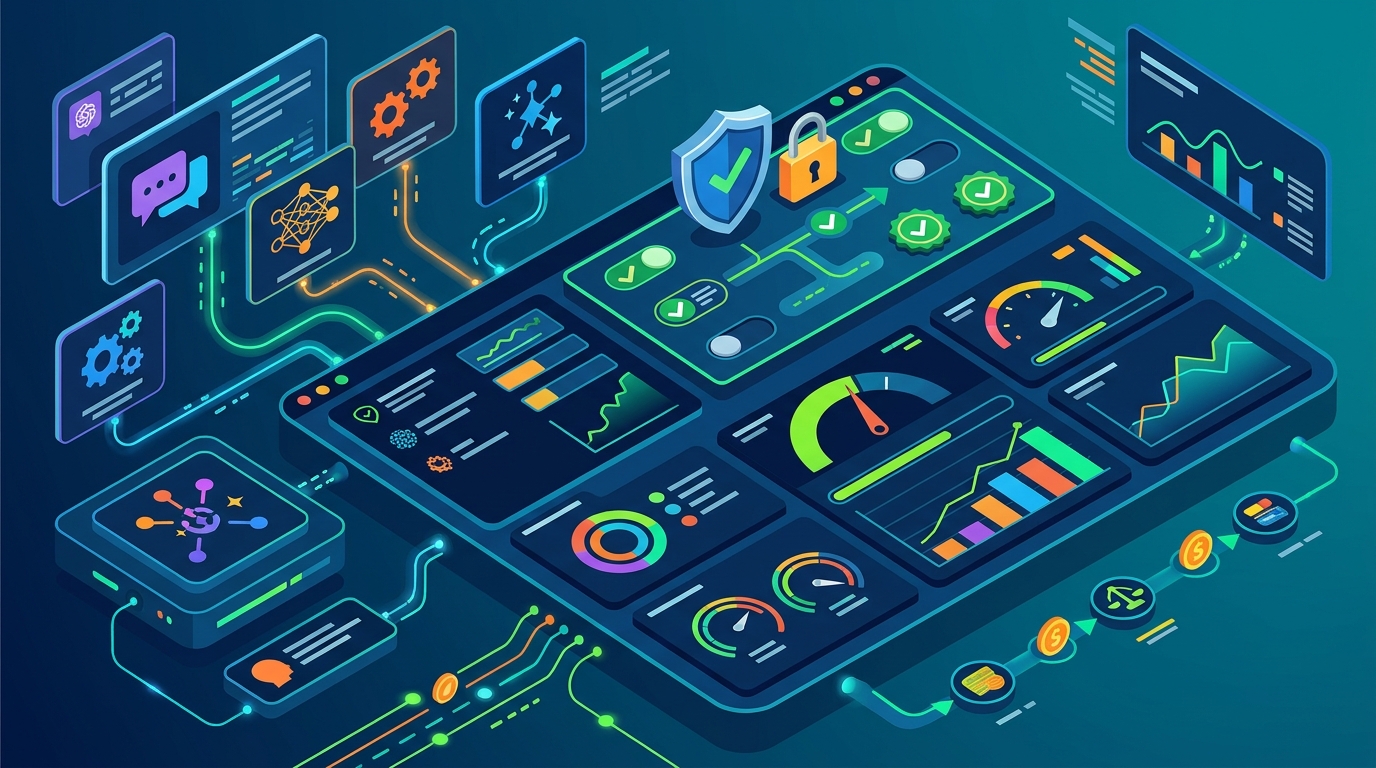
Modern AI governance platforms solve these issues by providing a single interface for all AI models. Acumen Velocity's AI Workbench exemplifies this approach by placing ChatGPT, Claude, Gemini, and other specialized models in one secure workspace. This architecture allows IT departments to maintain control over access, while employees retain the flexibility to choose the model that best fits their specific task. The platform ensures that all interactions are logged, monitored, and governed under a single set of organizational policies.
Strategic Benefits of Unified Governance
Implementing a centralized AI governance platform offers distinct advantages for different stakeholders within the organization:
- For Employees: Access to a curated selection of high-quality models without managing multiple logins or subscriptions.
- For IT: The ability to route requests to appropriate models and monitor usage patterns to identify security threats.
- For Finance: A single contract and billing statement that simplifies accounting and enables accurate chargeback to departments.
- For Leadership: Visibility into how AI is actually being used across the company, allowing for data-driven strategic planning.
LLM Cost Monitoring
LLM cost monitoring is the practice of tracking the financial expenditure associated with the use of large language models. As AI usage scales, token costs can quickly become a significant budget line item. Effective cost monitoring requires more than just looking at total spend; it demands granular visibility into who is using which models and for what purposes.
Understanding Token Economics
Large language models typically charge based on the number of tokens processed, which includes both input and output data. Different models have different pricing structures, and some tasks are better suited for lower-cost models than others. Without intelligent routing, organizations often pay premium prices for routine tasks that could be handled by more economical models. This inefficiency leads to budget overruns and reduced ROI on AI investments.
Intelligent Model Routing
Advanced AI governance platforms incorporate intelligent routing to optimize costs. This technology automatically directs routine, low-complexity requests to lower-cost models while reserving premium models for complex tasks that require higher reasoning capabilities. By matching the model to the task, organizations can significantly reduce their overall AI spend without sacrificing output quality. This approach ensures that every dollar spent on AI is used as efficiently as possible.
Departmental Chargeback and Budgeting
Accurate cost monitoring enables organizations to implement departmental chargeback. By tracking usage by department, IT and finance teams can allocate AI costs to the business units that benefit from them. This transparency encourages responsible usage and helps leadership make informed decisions about AI budget allocation. It also provides the data necessary to build a 12-month roadmap based on actual usage patterns rather than assumptions.
| Feature | Traditional AI Subscriptions | Unified AI Governance Platform |
|---|---|---|
| Contract Management | Multiple contracts with different vendors | Single contract with one provider |
| Billing | Separate invoices for each tool | One consolidated bill |
| Usage Visibility | Limited to individual tool dashboards | Organization-wide usage and cost reporting |
| Model Selection | Fixed to specific vendor models | Choice of multiple models with intelligent routing |
| Data Ownership | History tied to specific vendors | History and context owned by the organization |
Key Takeaways
- AI governance platforms provide a unified view of AI usage, costs, and compliance across multiple tools.
- Fragmented AI adoption leads to cost opacity, security risks, and vendor lock-in.
- Centralized access allows employees to choose the best model for their task while IT maintains control.
- LLM cost monitoring is essential for managing the financial impact of AI at scale.
- Intelligent model routing optimizes costs by matching tasks to the most appropriate models.
- Departmental chargeback promotes responsible AI usage and accurate budgeting.
- Organizations should start with a small pilot to understand actual AI usage before scaling.
- Acumen Velocity's AI Workbench offers a secure, unified workspace for major AI models with IT control.
Frequently Asked Questions
What is an AI governance platform?
An AI governance platform is a software solution that provides centralized control, monitoring, and management of AI tools and models within an organization. It ensures that AI usage aligns with security, compliance, and financial policies.
How does AI Workbench track spending?
AI Workbench tracks spending by logging all AI requests and associating them with specific departments and users. This data is then used to generate detailed reports on usage and costs, enabling accurate chargeback and budgeting.
Can employees choose which AI model to use?
Yes, AI Workbench allows employees to select from a range of major AI models, including ChatGPT, Claude, and Gemini. However, IT can configure routing rules to ensure that requests are directed to the most appropriate and cost-effective models.
What is the benefit of intelligent model routing?
Intelligent model routing reduces costs by automatically directing routine tasks to lower-cost models and reserving premium models for complex tasks. This optimization ensures that organizations get the best value from their AI investments.
How does AI Workbench handle data security?
AI Workbench runs on secure hosting in a dedicated tenant for each organization. This ensures that data and context remain within the organization's control and are protected by enterprise-grade security measures.
What is the typical pilot size for AI Workbench?
Pilots for AI Workbench typically start with 10 to 25 people. This small group allows organizations to understand their actual AI usage patterns and needs before committing to a larger rollout.
How can AI governance improve decision-making?
AI governance provides leadership with visibility into how AI is being used across the organization. This data-driven insight enables more informed strategic planning and resource allocation, leading to better business outcomes.
Is AI Workbench available on the cloud?
Yes, AI Workbench is available as a cloud-based solution. It is designed to be scalable and flexible, allowing organizations to adapt to their evolving AI needs.
Conclusion
As AI becomes integral to business operations, the need for effective governance and cost management becomes paramount. Organizations must move beyond fragmented AI subscriptions to adopt unified platforms that provide visibility, control, and efficiency. Acumen Velocity's AI Workbench offers a comprehensive solution that addresses these challenges by consolidating access to major AI models into a single, secure workspace. By implementing intelligent routing and detailed cost monitoring, Acumen Velocity helps organizations optimize their AI investments and drive business value. To explore how AI Workbench can transform your AI strategy, contact our team.