

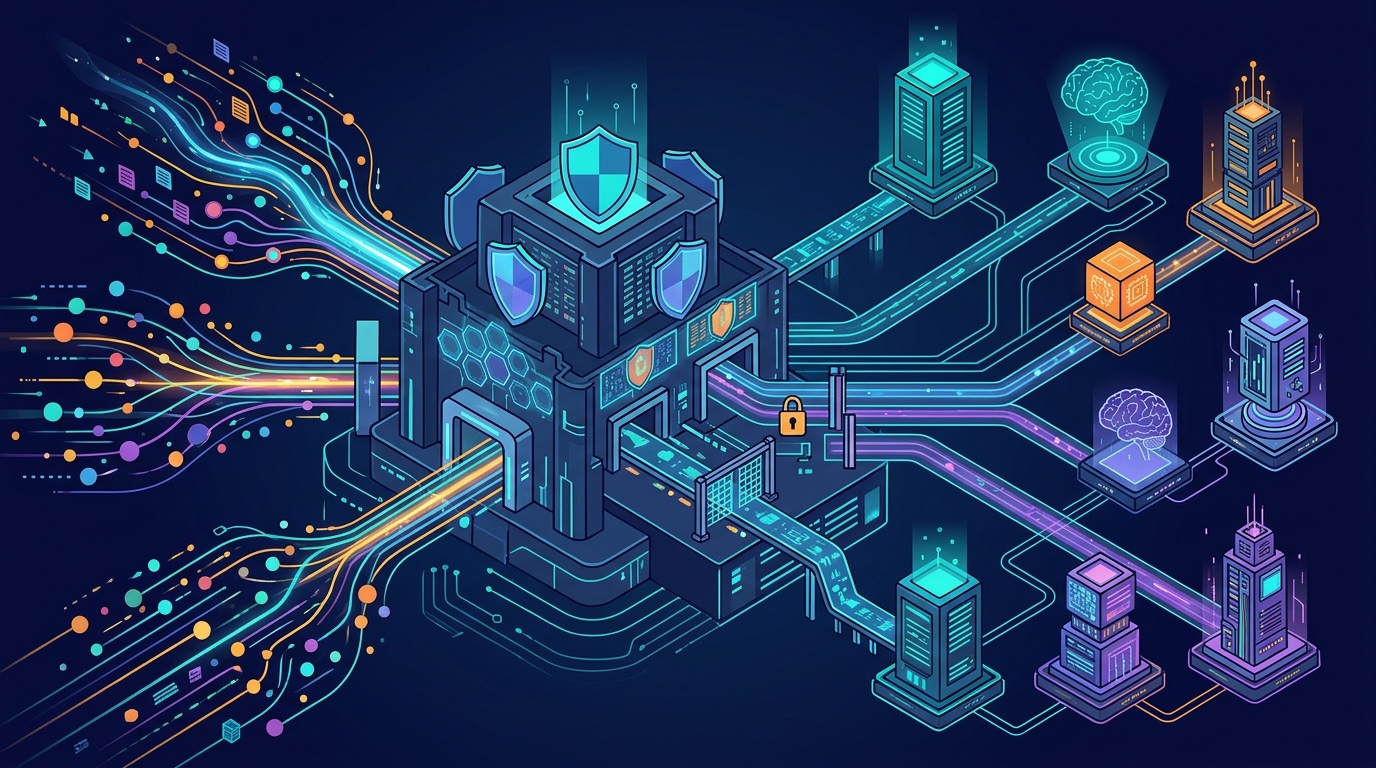
Enterprises are rapidly adopting multiple large language models to meet diverse business needs. However, managing these disparate subscriptions often leads to fragmented data and uncontrolled costs. An AI gateway is a centralized software layer that routes requests to various AI models while enforcing security and governance policies. Acumen Velocity helps organizations navigate this complexity by providing data-driven strategies that unify AI access and ensure operational control.
1. Acumen Velocity AI Workbench
Best for organizations requiring a single contract and unified billing for all major AI models.
Acumen Velocity AI Workbench provides a secure workspace that integrates ChatGPT, Claude, Gemini, and other specialized models. It routes each request to the model that best fits the task, ensuring optimal performance and cost efficiency. IT leaders gain full visibility into usage and costs by department, allowing for precise chargeback and budget management.
2. OpenAI API Platform
Best for teams deeply invested in the OpenAI ecosystem and GPT-series models.
The OpenAI API offers direct access to their proprietary models with robust documentation and high availability. While it excels in specific tasks, it lacks the multi-vendor routing capabilities needed for a diverse enterprise AI strategy. Organizations using this platform must manage their own governance and security layers externally.
3. Anthropic Claude API
Best for applications requiring high levels of safety and nuanced reasoning.
Anthropic focuses on building safe and steerable AI systems, with Claude models known for their strong performance in complex reasoning tasks. The API provides a direct interface for developers to integrate these models into their applications. Like other single-vendor APIs, it requires separate management if used alongside other model providers.
4. Google Vertex AI
Best for enterprises already standardized on Google Cloud infrastructure.
Vertex AI provides a unified platform for building, deploying, and managing machine learning models, including Google's Gemini models. It offers strong integration with other Google Cloud services, making it ideal for data-heavy workflows. However, it is primarily focused on Google's own models and may not support external providers as seamlessly as a dedicated gateway.
5. Azure AI Foundry
Best for Microsoft-centric enterprises seeking integrated AI capabilities.
Azure AI Foundry allows organizations to build, deploy, and manage AI applications using a variety of models, including those from OpenAI and Microsoft. It provides enterprise-grade security and compliance features that align with Microsoft's cloud ecosystem. This platform is well-suited for companies that have already adopted Azure for their core IT infrastructure.
6. AWS Bedrock
Best for AWS-native environments requiring scalable AI model access.
AWS Bedrock provides API access to a selection of high-performing foundation models from leading AI labs. It offers a unified interface for building generative AI applications while leveraging AWS's robust security and compliance framework. This solution is particularly effective for organizations that have built their data infrastructure on AWS.
7. Open-Source LLM Routers
Best for technical teams seeking full control and customization.
Open-source routing tools allow developers to build custom AI gateways tailored to their specific needs. These solutions offer maximum flexibility but require significant engineering resources to maintain and secure. They are suitable for organizations with strong in-house development capabilities and specific, non-standard routing requirements.
Choosing the Right AI Gateway
Frequently Asked Questions
What is an AI gateway?
An AI gateway is a software layer that sits between applications and AI models, managing routing, security, and usage monitoring for multiple model providers.
Why do enterprises need to govern multiple LLMs?
Enterprises need governance to control costs, ensure data security, and maintain compliance when using various AI models from different vendors.
How does Acumen Velocity AI Workbench handle billing?
Acumen Velocity AI Workbench consolidates usage into a single contract and bill, allowing organizations to negotiate private rates and track costs by department.
Can AI gateways route requests to different models automatically?
Yes, advanced AI gateways can analyze the request and route it to the most suitable model based on task complexity, cost, and performance requirements.
What are the main benefits of using a centralized AI platform?
Centralized AI platforms provide unified access, simplified management, better cost visibility, and enhanced security controls across all AI usage.
Conclusion
Effective AI governance requires a platform that balances flexibility with control. Acumen Velocity provides the expertise and tools to help your organization implement a robust AI strategy. To explore how AI Workbench can transform your data and AI operations, request a pilot today.