

Government websites require translation systems that combine automated speed with rigorous human review to ensure legal accuracy and public trust. Acumen Velocity provides AI-powered document processing and translation solutions that integrate human-in-the-loop (HITL) workflows, ensuring that critical public information remains compliant and accessible. This guide covers the essential components of translation management systems, the specific challenges of government localization, and the compliance frameworks required for multilingual content.
Translation Management Systems
A translation management system (TMS) is a software platform that coordinates the workflow of translating content from one language to another. For government entities, a TMS is not merely a tool for language conversion; it is a governance layer that tracks version control, reviewer assignments, and audit trails. Modern TMS platforms integrate machine translation engines with human review interfaces, allowing linguists to edit, approve, or reject automated outputs. This hybrid approach, often called human-in-the-loop (HITL), balances the cost-efficiency of AI with the nuance of professional linguists.
The Role of Human-in-the-Loop Review
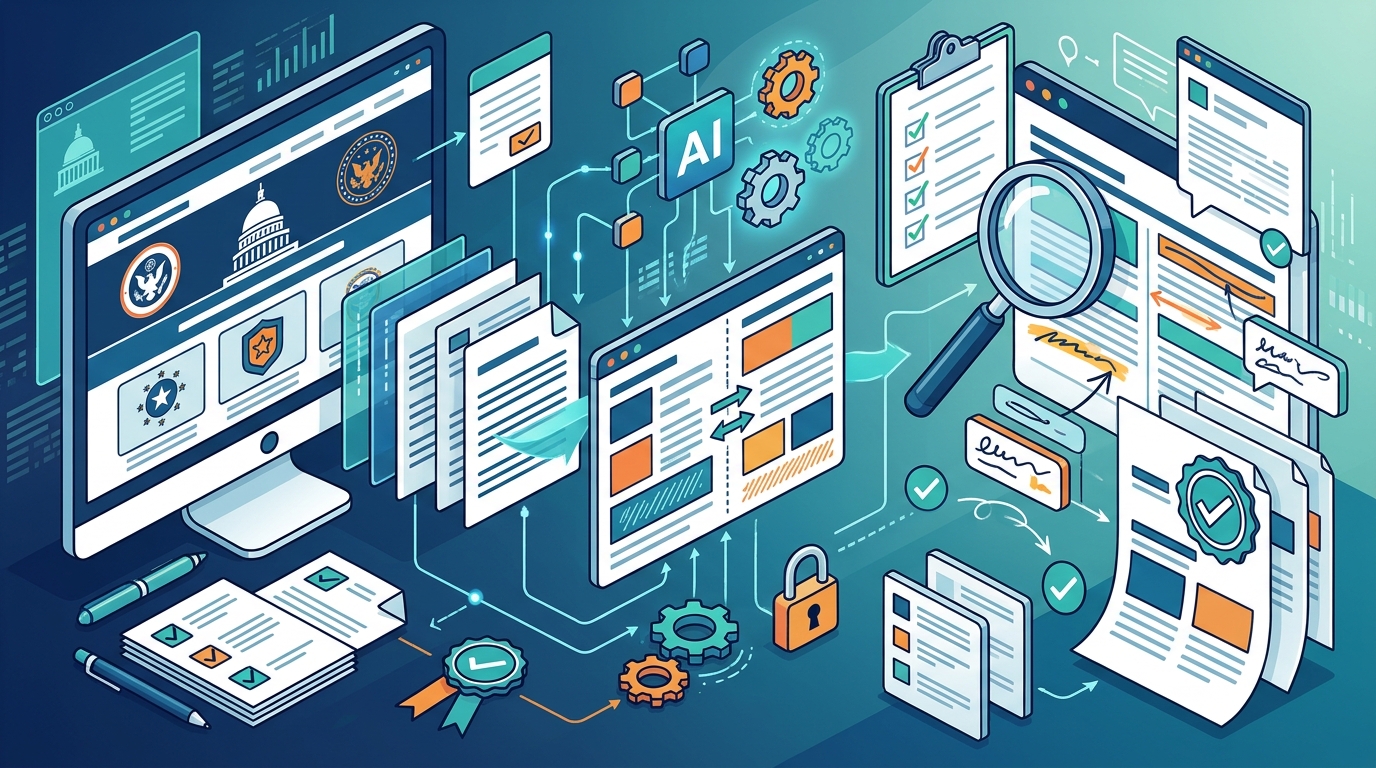
Human-in-the-loop review is a process where human experts validate, correct, or approve machine-generated translations before publication. In a government context, this step is critical because legal terminology, regulatory language, and cultural nuances cannot always be captured by algorithms. A robust TMS provides a side-by-side view of the source and target text, highlighting changes made by the machine and allowing the human reviewer to accept or modify them. This ensures that the final output meets the specific quality standards required for public-facing documents.
Key Features to Evaluate
When selecting a TMS for public sector use, organizations must look beyond basic translation capabilities. The system must support secure data handling, role-based access control, and detailed reporting on translation status. Acumen Velocity’s Automated Document Processing and Translation solution leverages AI to streamline these workflows, reducing manual effort while maintaining the necessary oversight. The platform supports multiple languages, ensuring that diverse populations can access critical information without delay.
| Feature | Basic TMS | Advanced HITL TMS |
|---|---|---|
| Machine Translation | Basic API integration | Context-aware AI models |
| Human Review | Manual copy-paste | Integrated side-by-side editor |
| Version Control | File-based | Database-tracked with audit logs |
| Compliance Reporting | None | Automated compliance dashboards |
Government Website Localization
Government website localization is the process of adapting digital content to meet the linguistic, cultural, and technical requirements of a specific target audience. Unlike commercial localization, which focuses on brand voice and sales conversion, government localization prioritizes clarity, accessibility, and legal accuracy. The goal is to ensure that every citizen, regardless of their primary language, can understand their rights, obligations, and available services. This requires a deep understanding of the specific terminology used in public administration and a commitment to inclusive design.
Challenges in Public Sector Localization
Public sector organizations face unique challenges when localizing their websites. Content is often updated frequently due to changing regulations, emergency alerts, or policy shifts. Manual translation cannot keep pace with this volume, leading to outdated or inconsistent information. Furthermore, government content must adhere to strict accessibility standards, such as WCAG, which require that translated content remains navigable and readable for users with disabilities. A specialized TMS can automate the detection of accessibility issues in translated content, ensuring that localization does not compromise usability.
Strategic Implementation
Implementing a localization strategy for a government website requires a phased approach. Organizations should begin by identifying the most critical content, such as emergency information, tax forms, and public health guidelines. Acumen Velocity helps clients navigate this process by providing a data-driven approach to content prioritization. By analyzing user traffic and engagement metrics, the team can determine which pages require immediate translation and which can be handled in subsequent phases. This ensures that resources are allocated efficiently and that the highest-impact content is available in multiple languages first.
Multilingual Content Compliance
Multilingual content compliance is the practice of ensuring that translated materials adhere to legal, regulatory, and ethical standards. For government websites, this is not optional; it is a legal requirement in many jurisdictions. Non-compliant translations can lead to legal liability, public mistrust, and exclusion of non-English speaking citizens from essential services. Compliance extends beyond linguistic accuracy to include data privacy, copyright, and accessibility regulations. A comprehensive TMS must include features that help organizations monitor and enforce these standards across all translated content.
Regulatory Requirements
Government agencies must comply with a variety of regulations when publishing multilingual content. These may include laws that mandate the translation of specific public documents, data protection regulations that govern how personal information is handled in different languages, and accessibility laws that require digital content to be usable by people with disabilities. Acumen Velocity’s data governance and compliance services help organizations map these requirements to their translation workflows. By integrating compliance checks into the TMS, agencies can ensure that every piece of content is vetted against the relevant regulatory framework before publication.
Building a Compliance Framework
Building a robust compliance framework for multilingual content requires collaboration between legal, IT, and communications teams. The framework should define clear roles and responsibilities for content creation, translation, review, and publication. It should also include procedures for handling errors or discrepancies in translated content. Acumen Velocity assists clients in developing these frameworks by leveraging their expertise in data architecture and integration. The team works with stakeholders to design a governance model that is scalable, auditable, and aligned with the organization’s strategic goals. This ensures that multilingual content is not only accurate but also trustworthy and compliant.
Key Takeaways
- Human-in-the-loop review is essential for government translation to ensure legal and cultural accuracy.
- A robust TMS must integrate machine translation with human review interfaces and audit trails.
- Government localization prioritizes clarity and accessibility over commercial brand voice.
- Phased implementation allows agencies to prioritize critical content for translation.
- Multilingual content compliance is a legal requirement in many jurisdictions.
- Data governance frameworks help ensure that translated content meets regulatory standards.
- Acumen Velocity provides AI-powered solutions that streamline translation workflows while maintaining oversight.
- Accessibility standards must be applied to translated content to ensure inclusive design.
Frequently Asked Questions
What is human-in-the-loop translation?
Human-in-the-loop translation is a process where machine-generated translations are reviewed and edited by human linguists before publication. This approach combines the speed of AI with the accuracy of human expertise, ensuring that the final content meets high quality standards.
Why is human review necessary for government websites?
Human review is necessary because government content often contains legal, regulatory, and cultural nuances that machine translation may misinterpret. Human experts can ensure that the language is accurate, appropriate, and compliant with public sector standards.
How does Acumen Velocity support government translation?
Acumen Velocity offers AI-powered document processing and translation solutions that include human-in-the-loop capabilities. The platform supports multiple languages and integrates with existing data systems to streamline workflows and ensure compliance.
What are the main challenges of government website localization?
The main challenges include keeping content up-to-date, ensuring accessibility for all users, and complying with legal and regulatory requirements. Manual translation is often too slow to keep pace with frequent content updates.
How can organizations ensure multilingual content compliance?
Organizations can ensure compliance by implementing a robust TMS with built-in compliance checks, defining clear governance frameworks, and training staff on regulatory requirements. Regular audits and monitoring are also essential.
What features should a government TMS have?
A government TMS should have secure data handling, role-based access control, version control, audit trails, and integration with accessibility tools. It should also support multiple languages and provide detailed reporting on translation status.
Can machine translation replace human translators in the public sector?
Machine translation can handle routine content but cannot replace human translators for complex, legal, or culturally sensitive material. A hybrid approach that uses both is the most effective strategy for government websites.
How does Acumen Velocity help with data governance in translation?
Acumen Velocity helps clients develop data governance frameworks that ensure translated content is secure, compliant, and auditable. The team works with stakeholders to design a model that aligns with the organization’s strategic goals and regulatory requirements.
Conclusion
Selecting the right translation management system for a government website requires a careful balance of automation, human oversight, and compliance. Acumen Velocity provides the expertise and technology to help public sector organizations navigate these challenges. By leveraging AI-powered solutions with human-in-the-loop review, agencies can ensure that their multilingual content is accurate, accessible, and compliant. To explore how Acumen Velocity can support your translation and data governance needs, contact our team for a consultation.