

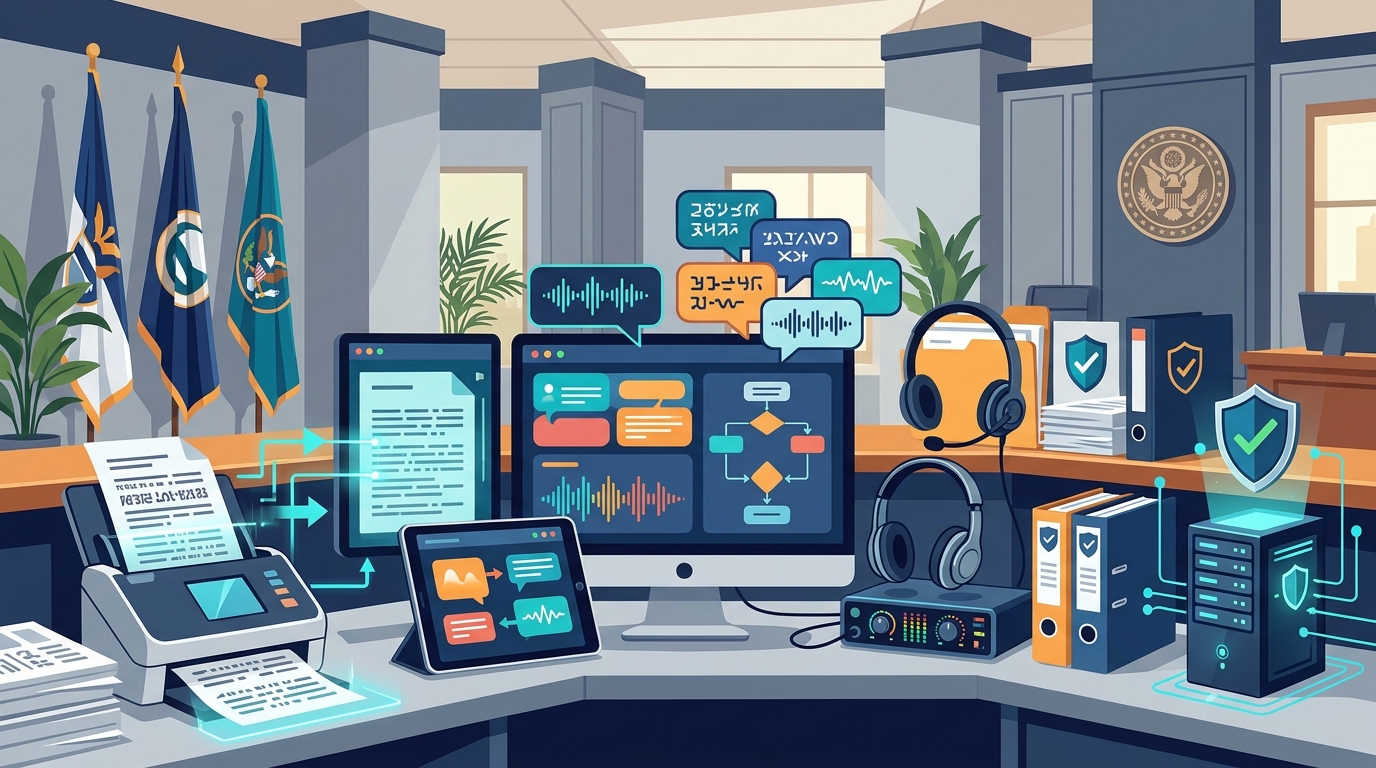
State and local agencies meet language access requirements by deploying automated document translation, real-time interpretation, and data governance tools. These systems ensure that non-English-speaking residents receive accurate, timely, and compliant information. This guide covers the essential technologies and strategies for building an inclusive digital infrastructure.
Language Access Compliance
Language access compliance is the practice of ensuring that government services and information are available to all residents, regardless of their primary language. Federal and state regulations often mandate that agencies provide meaningful access to Limited English Proficient (LEP) individuals. This includes translating vital documents and providing interpretation services for in-person and digital interactions.
The Regulatory Landscape
Agencies must navigate a complex web of federal, state, and local laws. Title VI of the Civil Rights Act of 1964 prohibits discrimination on the basis of national origin, which includes language. The Department of Justice has issued guidance requiring agencies to take reasonable steps to ensure meaningful access. This often involves a four-factor analysis considering the number of LEP individuals, the frequency of contact, the nature of the program, and the available resources.
Automated Document Translation
Manual translation is slow and expensive. Modern AI-powered translation tools allow agencies to process large volumes of documents quickly. These systems support hundreds of languages and can maintain formatting, which is critical for legal and administrative forms. Acumen Velocity offers the Acumen Translation Hub, a software-as-a-service solution available on the Google Cloud Marketplace. It supports 135 languages and is designed to streamline document translation at scale, providing a seamless alternative to deprecated services.
Interpretation and Real-Time Communication
Document translation is only half the equation. Agencies also need real-time interpretation for phone calls, video conferences, and in-person meetings. Integrated communication platforms can connect residents with certified interpreters instantly. This ensures that critical interactions, such as benefits applications or legal notices, are understood accurately.
Government Data Accessibility
Government data accessibility is the ability of residents to access, understand, and use public data in a format that is inclusive and user-friendly. Data is the backbone of modern governance, but if it is locked in silos or presented in a single language, it fails to serve the entire community. Agencies must ensure that data products, dashboards, and reports are accessible to all.
Breaking Down Data Silos
Many agencies struggle with fragmented data stored in disparate systems. This fragmentation makes it difficult to provide a unified view of services. A modern data architecture integrates data from various sources into a unified system. Acumen Velocity specializes in Data Architecture and Integration, helping agencies design scalable and efficient data architectures. By integrating data from various sources, agencies can create a single source of truth that is easier to translate and distribute.
Open Data and Public Portals
Data Governance and Quality
High-quality data is essential for accurate translation. If the source data is inconsistent or incomplete, the translated output will be flawed. Data Governance and Compliance frameworks ensure that data is accurate, consistent, and reliable. By establishing clear policies for data usage and privacy, agencies can maintain trust with residents while meeting regulatory requirements.
| Tool Category | Primary Function | Benefit for Language Access |
|---|---|---|
| Document Translation | Automated translation of PDFs, forms, and reports | Reduces cost and time for vital document localization |
| Real-Time Interpretation | Audio and video interpretation services | Enables meaningful access during live interactions |
| Data Integration | Unifying data from multiple sources | Creates a single source of truth for localization |
| Data Governance | Managing data quality and compliance | Ensures accuracy and trust in translated data |
Key Takeaways
- Language access compliance is a legal requirement, not just a best practice.
- AI-powered translation tools can handle large volumes of documents efficiently.
- Real-time interpretation is essential for meaningful access in live interactions.
- Data silos hinder the ability to provide unified, localized information.
- Strong data governance ensures that translated data is accurate and reliable.
- Acumen Velocity provides specialized solutions for translation and data integration.
- A holistic approach combines technology, governance, and user experience.
Frequently Asked Questions
What are the legal requirements for language access in government?
Federal laws like Title VI of the Civil Rights Act require agencies to take reasonable steps to ensure meaningful access for LEP individuals. This includes translating vital documents and providing interpretation services. The specific requirements depend on the number of LEP residents, the frequency of contact, and the nature of the program.
How can agencies translate large volumes of documents efficiently?
Agencies can use AI-powered translation tools that support multiple languages and maintain document formatting. These tools can process documents in bulk, significantly reducing the time and cost associated with manual translation. Acumen Velocity's Acumen Translation Hub is designed for this purpose, supporting 135 languages.
What is the role of data governance in language access?
Data governance ensures that the source data is accurate, consistent, and reliable. If the data is flawed, the translated output will be incorrect. Strong governance frameworks help agencies maintain trust with residents and ensure that their data meets regulatory standards.
How do data silos impact language access?
Data silos make it difficult to provide a unified view of government services. When data is fragmented, it is harder to translate and distribute consistently. Integrating data from various sources into a unified system helps agencies create a single source of truth that is easier to localize.
What is the difference between translation and interpretation?
Translation refers to the conversion of written text from one language to another. Interpretation refers to the real-time conversion of spoken language. Both are essential for language access, but they require different tools and services. Agencies need both to ensure comprehensive access.
How can agencies ensure that their data is accessible to all residents?
What are the benefits of using a cloud-based translation solution?
Cloud-based solutions offer scalability, security, and ease of use. They can be integrated with existing systems and accessed from anywhere. This makes it easier for agencies to manage translation workflows and ensure consistent quality.
How does Acumen Velocity help agencies with language access?
Acumen Velocity provides specialized solutions for document translation and data integration. Their Acumen Translation Hub supports 135 languages, and their data architecture services help agencies break down silos and create a unified data ecosystem.
Conclusion
Meeting language access requirements is a critical responsibility for state and local agencies. By leveraging modern tools for document translation, real-time interpretation, and data integration, agencies can ensure that all residents have meaningful access to government services. Acumen Velocity is committed to helping agencies revolutionize legacy data utilization and enhance data quality. To learn more about how we can help your agency meet its language access goals, contact our team.