

Enterprise AI gateways are secure middleware platforms that consolidate multiple large language models into a single, governed interface for organizational teams. They eliminate fragmented subscriptions and provide centralized control over usage, cost, and security. This guide covers the architecture of AI gateways, secure access protocols, model orchestration strategies, and governance frameworks. It explains how organizations can unify their AI stack while maintaining strict compliance and cost efficiency.
Enterprise AI Gateways
Modern enterprises face a fragmented AI landscape. Teams often purchase separate subscriptions for different models, leading to redundant costs and inconsistent security. An enterprise AI gateway is a centralized layer that sits between internal applications and external AI providers. It acts as a single point of entry for all AI requests, abstracting the complexity of managing multiple vendor contracts and API keys.
By consolidating access, organizations can standardize their AI consumption. Instead of each department managing its own credentials, IT departments control the entire flow of data. This approach ensures that every interaction with an AI model is logged, monitored, and billed under a single agreement. It transforms AI from a collection of disparate tools into a unified utility.
The Problem of Fragmented Subscriptions
Without a gateway, AI spend becomes difficult to track. Different teams may use different models for similar tasks, often paying premium rates for top-tier models when a lower-cost option would suffice. This lack of visibility prevents finance teams from setting accurate budgets. It also creates security risks, as API keys are scattered across various developer environments and applications.
Centralized Control and Billing
A gateway solves these issues by holding contracts with major AI providers. The organization signs one agreement and receives one bill. This simplifies procurement and financial reporting. It also allows for negotiated rates based on aggregate usage, which are often lower than individual subscription costs. The gateway ensures that IT retains control over which models are available to which users.
Secure LLM Access
Security is the primary driver for adopting a centralized AI interface. Secure LLM access is the practice of restricting and monitoring how employees interact with large language models. It ensures that sensitive data does not leak to unauthorized third parties and that usage aligns with corporate security policies. This is critical for industries with strict regulatory requirements, such as healthcare and finance.
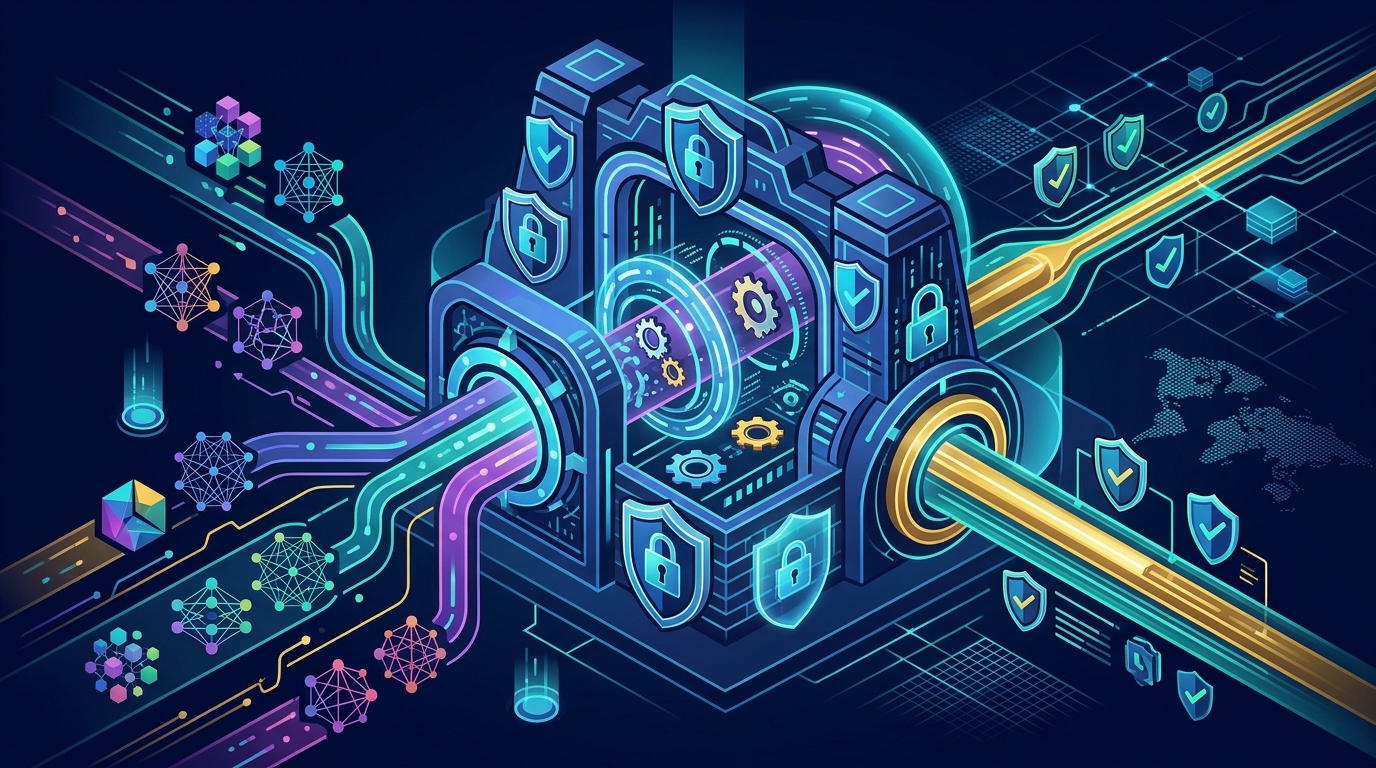
Traditional AI tools often store user history and context with the vendor. This creates a risk of data retention and potential misuse. A secure gateway keeps this history and context within the organization's own infrastructure. It acts as a firewall, inspecting prompts and responses for sensitive information before they leave the internal network. This ensures that proprietary data remains protected.
Isolation and Data Privacy
Secure access requires isolation of user data. The gateway must ensure that data from one department or project does not bleed into another. It provides a dedicated tenant environment for the organization. This isolation is essential for maintaining trust and compliance. It prevents cross-contamination of data and ensures that each team's context remains private.
Compliance and Audit Trails
Regulatory compliance demands detailed audit trails. A secure gateway logs every request, including the user, the model used, and the content of the prompt and response. These logs are stored securely and can be reviewed by compliance teams. This capability is vital for demonstrating adherence to data protection laws. It provides a clear record of how AI is used within the organization.
AI Model Orchestration
AI model orchestration is the automated process of routing user requests to the most appropriate AI model based on the task requirements. Not every task requires the most powerful or expensive model. Simple queries can be handled by faster, lower-cost models, while complex reasoning tasks require advanced models. Orchestration ensures that resources are used efficiently and effectively.
Cost Optimization Through Routing
Cost optimization is a direct benefit of intelligent routing. By sending routine tasks to lower-tier models, organizations can significantly reduce their AI spend. The gateway tracks usage by department and model, providing detailed cost breakdowns. This data enables IT to implement chargeback models, where departments are billed for their actual AI consumption. This transparency encourages responsible usage and helps finance teams manage budgets more accurately.
Performance and Latency Management
Orchestration also considers performance metrics. Some models are faster but less accurate, while others are slower but more precise. The gateway can balance these factors based on the user's needs. For real-time applications, latency is critical, so the system may prioritize speed. For analytical tasks, accuracy is paramount, so the system may select a more capable model. This balance ensures that the AI experience is both fast and reliable.
Enterprise AI Governance
Enterprise AI governance is the framework of policies, processes, and controls that manage the lifecycle of AI within an organization. It encompasses data quality, model selection, usage monitoring, and risk management. Governance ensures that AI is used ethically, legally, and in alignment with business objectives. It provides the structure needed to scale AI adoption safely.
Effective governance requires visibility into how AI is actually being used. Without this data, organizations are making decisions based on assumptions. A governance framework powered by a centralized gateway provides real-time insights into usage patterns. It shows which departments are using AI, for what purposes, and with what results. This data-driven approach allows leaders to plan future AI investments based on actual needs rather than speculation.
Usage Analytics and Roadmapping
Usage analytics are a key component of governance. They provide a clear picture of AI adoption across the organization. Leaders can identify trends, such as increased usage in specific departments or for specific tasks. This information is invaluable for strategic planning. It helps organizations develop a 12-month roadmap for AI expansion. By understanding current usage, leaders can predict future requirements and allocate resources accordingly.
Policy Enforcement and Risk Mitigation
Governance also involves enforcing policies. The gateway can be configured to block certain types of requests or to flag potentially harmful content. This proactive approach mitigates risks associated with AI misuse. It ensures that AI is used in ways that are consistent with corporate values and legal requirements. By embedding governance into the technical infrastructure, organizations can enforce policies automatically and consistently.
Comparison of AI Access Models
| Feature | Fragmented Subscriptions | Centralized AI Gateway | ||||||
|---|---|---|---|---|---|---|---|---|
| Contract Management | Multiple vendor contracts | Single contract and bill | ||||||
| Cost Visibility | Low, scattered across teams | High, by department and model | ||||||
| Security Control | Decentralized, high risk | Centralized, low risk | Data Ownership | Vendor-held history | Organization-held context | Model Selection | Manual, per team | Automated orchestration |
| Governance | Reactive, manual audits | Proactive, automated monitoring |
Key Takeaways
- Enterprise AI gateways consolidate multiple models into a single secure interface.
- Centralized billing simplifies financial management and reduces costs.
- Secure LLM access keeps data history and context within the organization.
- AI model orchestration routes requests to the most cost-effective model.
- Usage analytics provide the data needed for strategic AI planning.
- Automated governance ensures compliance and mitigates risk.
- A pilot approach allows organizations to test AI adoption before scaling.
- Acumen Velocity provides a turnkey solution for implementing these capabilities.
Frequently Asked Questions
What is an enterprise AI gateway?
An enterprise AI gateway is a middleware platform that provides a single, secure interface for accessing multiple AI models. It centralizes management, billing, and security for all AI interactions within an organization.
How does model orchestration reduce costs?
Model orchestration reduces costs by automatically routing simple tasks to lower-cost models and complex tasks to higher-capability models. This ensures that organizations only pay for the level of AI power they actually need for each request.
Who owns the data history in a centralized AI system?
In a centralized AI system, the organization owns the data history and context. This is a significant advantage over individual subscriptions, where the vendor typically retains user data. Ownership ensures greater control and privacy.
What is the role of IT in an AI gateway?
IT is responsible for managing the AI gateway, including model routing, usage monitoring, and cost allocation. IT sees usage and cost by department, allowing for chargeback and budget management. This role shifts IT from a gatekeeper to an enabler of efficient AI use.
How long does it take to implement an AI gateway?
Implementation typically starts with a pilot involving a small group of users. A two-month pilot is common, allowing the organization to assess usage and refine the setup. This phased approach minimizes risk and ensures a smooth transition to full-scale adoption.
Can an AI gateway integrate with existing data systems?
Yes, modern AI gateways can integrate with existing data systems, including data lakes, warehouses, and MCP servers. This integration allows AI models to access relevant data securely, enhancing the accuracy and relevance of their responses.
What is the benefit of a single contract for AI models?
A single contract simplifies procurement and legal review. It also allows for negotiated rates based on total usage, which are often lower than individual subscription prices. This consolidation reduces administrative overhead and improves financial predictability.
How does Acumen Velocity support AI gateway implementation?
Acumen Velocity provides a turnkey solution for AI gateway implementation. Their AI Workbench offers governed access to major AI models, with features for routing, chargeback, and usage reporting. They support the entire process from intake to deployment and measurement.
Conclusion
Consolidating multiple AI models into a single secure interface is no longer optional for enterprises. It is a strategic necessity for managing cost, security, and governance. An enterprise AI gateway provides the infrastructure needed to scale AI adoption safely and efficiently. It transforms AI from a fragmented collection of tools into a unified, governed utility.
Acumen Velocity offers a comprehensive solution for this challenge. Our AI Workbench provides governed access to every major AI model, with IT in control. It includes features for model routing, chargeback, and usage reporting, all within a secure, dedicated tenant. To plan your visit and discuss your data readiness, contact our team to request a pilot and see how a centralized AI gateway can transform your organization's AI strategy.