

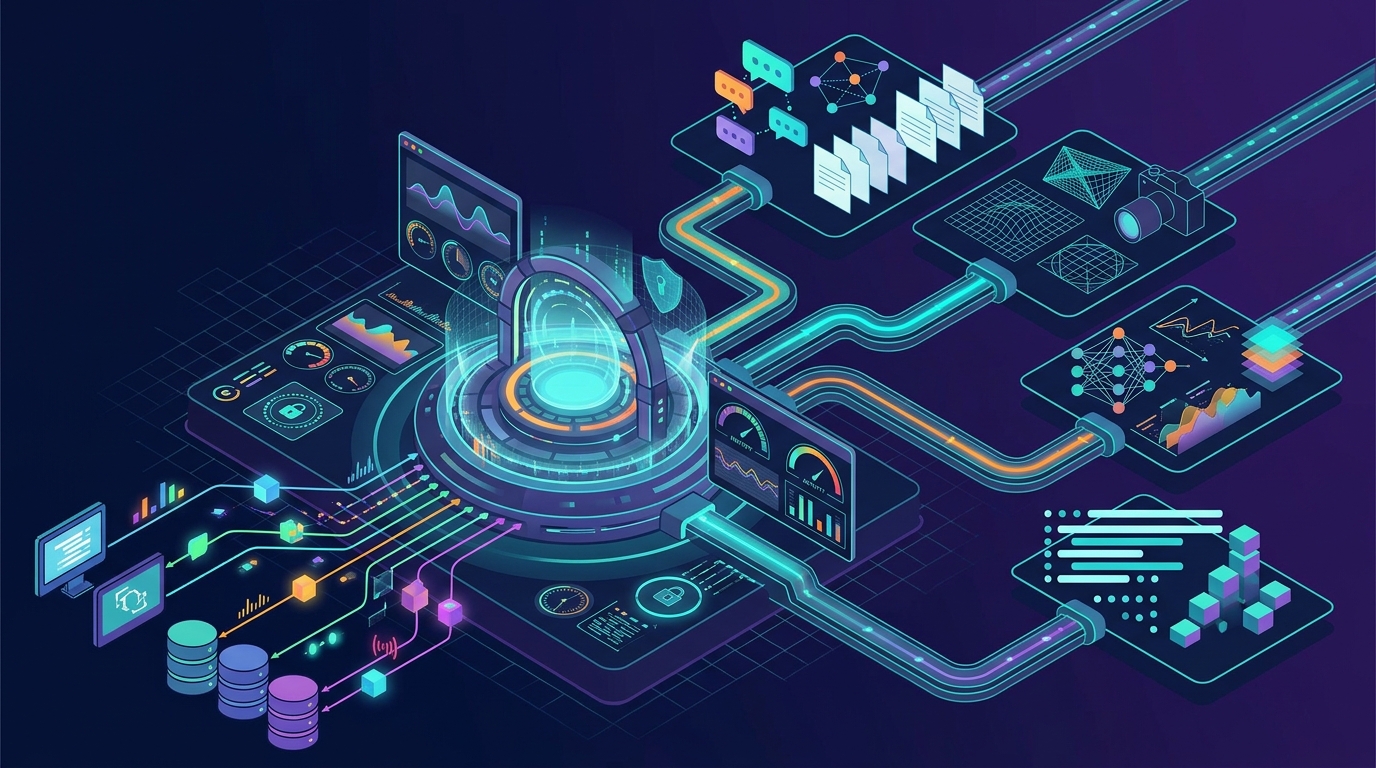
An AI gateway is a centralized software layer that acts as a single entry point for all AI model requests within an organization. It helps companies manage multiple AI models by providing unified access, security, and monitoring capabilities. This architecture simplifies the complexity of integrating various large language models and machine learning services into enterprise applications.
The Core Function of an AI Gateway
An AI gateway is a middleware component that sits between application code and AI model providers. It abstracts the underlying complexity of different model APIs, allowing developers to interact with a standardized interface. This abstraction layer is critical for organizations that utilize a mix of proprietary and open-source models.
By consolidating access, the gateway ensures that all AI interactions are logged, monitored, and governed. This centralization prevents the fragmentation that often occurs when teams independently integrate different AI services. It creates a single source of truth for AI usage across the enterprise.
For data-driven teams, this unified approach supports better data governance and compliance. It allows IT and security teams to enforce policies consistently, regardless of which specific model is being used. This is essential for maintaining control over sensitive data and ensuring regulatory adherence.
Managing Model Diversity and Vendor Lock-in
Enterprises often face the challenge of vendor lock-in when relying on a single AI provider. An AI gateway mitigates this risk by enabling multi-model support. It allows companies to switch between different model providers without rewriting application code. This flexibility is crucial for optimizing cost and performance.
For example, a company might use a high-performance model for complex reasoning tasks and a faster, cheaper model for simple classification. The gateway can route requests to the appropriate model based on predefined rules. This dynamic routing ensures that resources are used efficiently and effectively.
This capability is particularly relevant for organizations looking to leverage best-of-breed solutions. By avoiding dependency on a single vendor, companies can negotiate better terms and adapt to new technologies as they emerge. It supports a strategy of continuous improvement and technological agility.
Security, Governance, and Compliance
Governance frameworks are also enforced at the gateway level. Policies can be defined to restrict certain types of prompts or data inputs. This helps prevent the generation of harmful or biased content. It aligns AI usage with corporate ethics and compliance standards.
Acumen Velocity emphasizes the importance of data governance and compliance in AI initiatives. Their approach to Data Governance & Compliance ensures that AI systems operate within defined boundaries. This reduces risk and builds trust in AI-driven decision-making.
Performance Monitoring and Cost Optimization
Monitoring AI model performance is essential for maintaining service quality. An AI gateway provides real-time metrics on latency, throughput, and error rates. These insights help teams identify issues and optimize model configurations. It ensures that AI applications remain reliable and responsive.
Cost optimization is another key benefit. The gateway tracks usage and provides detailed billing reports. This visibility allows finance teams to understand the true cost of AI operations. It helps in budgeting and forecasting, preventing unexpected expenses.
By analyzing usage patterns, organizations can identify opportunities to reduce costs. For instance, they might switch to a more efficient model for low-priority tasks. This data-driven approach to cost management is a core aspect of modern data strategy. Acumen Velocity offers Data Strategy & Consulting to help organizations align their AI investments with business goals.
Implementation Considerations for Enterprises
Implementing an AI gateway requires careful planning and integration with existing infrastructure. It must be scalable to handle high volumes of requests. The gateway should also be highly available to ensure continuous service. This involves deploying the gateway in a resilient architecture.
Integration with existing data pipelines is another critical factor. The gateway should seamlessly connect with data lakes and warehouses. This ensures that AI models have access to the most up-to-date and relevant data. It supports the creation of a unified data ecosystem.
Acumen Velocity provides Data Architecture & Integration services to facilitate this process. Their expertise in building scalable data architectures ensures that AI gateways are implemented effectively. This supports the broader goal of transforming legacy data utilization.
Key Takeaways
- An AI gateway is a centralized layer that manages access to multiple AI models.
- It reduces vendor lock-in by enabling easy switching between model providers.
- Security and governance policies are enforced at the gateway level.
- Real-time monitoring helps optimize performance and manage costs.
- It integrates with existing data infrastructure to support AI workflows.
- Acumen Velocity offers services to support AI data readiness and governance.
Frequently Asked Questions
What is the primary benefit of using an AI gateway?
The primary benefit is the ability to manage multiple AI models through a single, standardized interface. This simplifies integration, enhances security, and provides centralized monitoring and governance capabilities for enterprise AI applications.
How does an AI gateway prevent vendor lock-in?
An AI gateway abstracts the underlying model APIs, allowing applications to interact with a common interface. This means that switching between different AI providers requires minimal code changes, reducing dependency on any single vendor.
Can an AI gateway handle different types of AI models?
Yes, an AI gateway can manage various types of AI models, including large language models, computer vision models, and predictive analytics engines. It provides a unified way to access and manage these diverse capabilities.
What role does an AI gateway play in data governance?
An AI gateway enforces data governance policies by controlling access to AI models and monitoring data inputs and outputs. It ensures that AI usage complies with organizational and regulatory requirements.
How does Acumen Velocity support AI gateway implementation?
Conclusion
An AI gateway is an essential component for enterprises managing multiple AI models. It provides the security, governance, and flexibility needed to deploy AI at scale. By centralizing AI access, organizations can optimize performance, reduce costs, and mitigate risk. Acumen Velocity is committed to helping clients leverage data and AI to drive business value. To explore how an AI gateway can fit into your data strategy, contact our team for a consultation.