

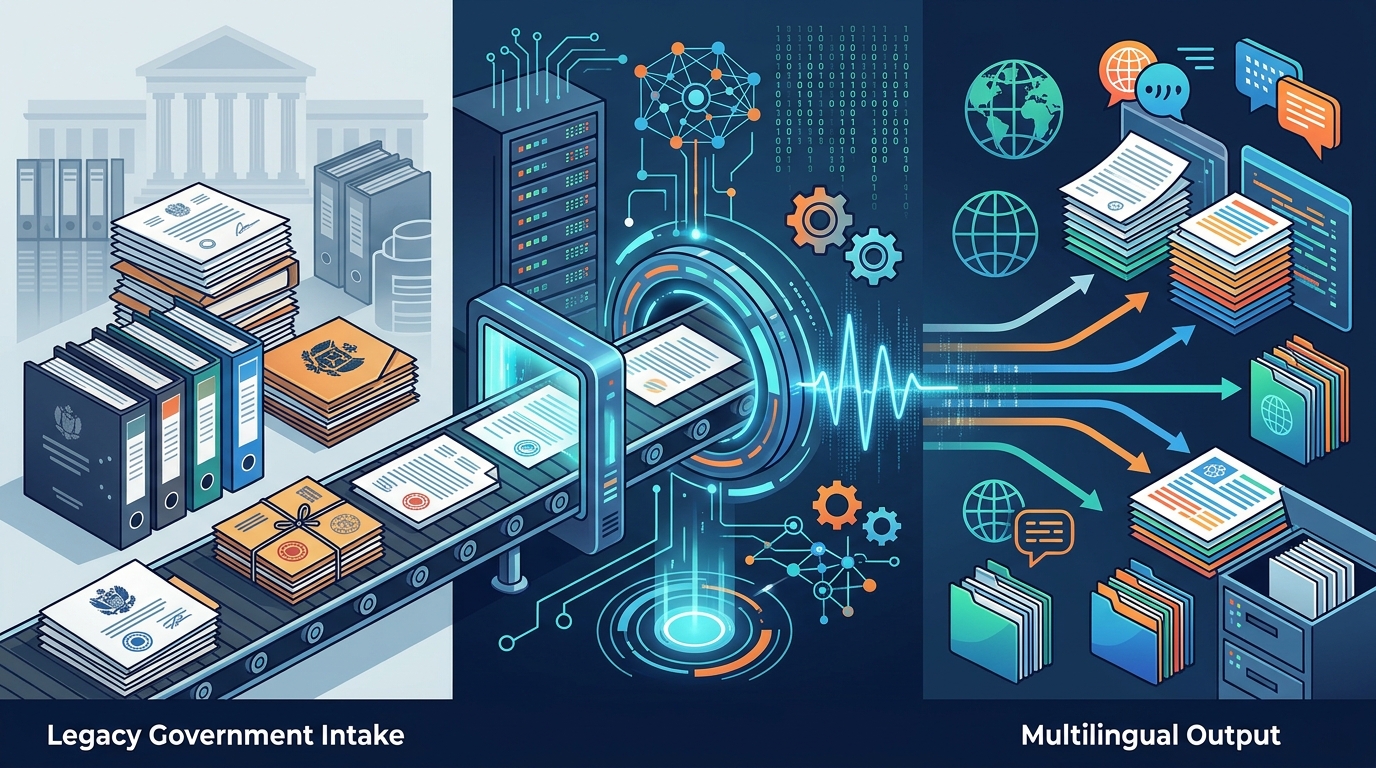
Machine translation platforms are worth considering for government document translation because they drastically reduce processing time and costs while maintaining high accuracy for routine administrative texts. For public sector agencies, these tools enable rapid multilingual communication, ensuring compliance with accessibility mandates and improving citizen engagement. By leveraging advanced neural networks, governments can translate vast archives and real-time communications without the bottlenecks of traditional human-only workflows.
The Strategic Value of Automated Translation
Government agencies face a constant pressure to serve diverse populations efficiently. Machine translation is the process of using software to convert text from one language to another without human intervention. This technology has evolved significantly, moving from rigid word-for-word substitutions to context-aware neural models. For public sector leaders, the primary value lies in scalability. A single agency might need to translate thousands of public notices, legal forms, and health advisories every month. Manual translation cannot keep pace with this volume, but automated systems can process these documents in minutes rather than days.
The financial implications are equally compelling. Traditional human translation services often charge per word, which becomes prohibitively expensive for large-scale government initiatives. Automated platforms typically operate on a subscription or usage-based model, offering a predictable cost structure. This predictability allows budget officers to plan long-term language access programs without the volatility of per-document pricing. Furthermore, the speed of machine translation allows for real-time updates. If a policy changes, the translated version can be updated and published almost instantly, ensuring that all citizens receive the most current information.
Accuracy and Context in Public Sector Documents
A common concern with automated translation is accuracy, particularly for legal and regulatory texts. However, modern platforms are designed to handle the specific nuances of government language. These systems use large language models that have been trained on vast amounts of public domain data, including statutes, regulations, and official communications. This training allows the software to understand formal tone, passive voice, and specific legal terminology. For example, a platform might correctly distinguish between the different legal implications of the word "shall" versus "must" in a regulatory context.
Despite these advancements, no machine translation system is perfect. The risk of misinterpretation remains, particularly for highly complex or ambiguous legal documents. This is where a hybrid approach becomes essential. Government agencies should use machine translation for high-volume, low-risk documents such as public service announcements, general information pages, and routine correspondence. For high-stakes legal documents, such as contracts or court filings, a human review step is still necessary. This Human-in-the-Loop (HITL) model combines the speed of automation with the precision of human expertise. By implementing this workflow, agencies can achieve both efficiency and accuracy.
Comparing Platform Capabilities and Features
When evaluating machine translation platforms, government buyers must look beyond basic translation accuracy. Several key features determine a platform's suitability for public sector use. First is language coverage. A robust platform should support a wide range of languages, including less common ones that may be spoken by local communities. Second is integration capability. The platform should easily integrate with existing government systems, such as content management systems, document management platforms, and customer service portals. This seamless integration ensures that translation is not a separate, manual step but an automated part of the publishing workflow.
Security and compliance are also critical factors. Government data is subject to strict privacy and security regulations. A suitable platform must offer enterprise-grade security, including data encryption, access controls, and compliance with standards such as FedRAMP or ISO 27001. Additionally, the platform should provide detailed audit logs and usage reporting. These features allow agencies to track how their data is being used and ensure that it is not being shared with unauthorized parties. By prioritizing these features, government agencies can select a platform that meets their operational needs while maintaining the highest standards of security and compliance.
Implementation Strategies for Public Agencies
Implementing a machine translation platform requires a thoughtful strategy. The first step is to conduct a needs assessment. Agencies should identify the types of documents they need to translate, the languages required, and the volume of content. This assessment helps in selecting the right platform and setting realistic expectations. Next, agencies should establish a governance framework. This framework should define the roles and responsibilities of different stakeholders, including content creators, translators, and IT staff. It should also outline the quality assurance process, including how errors will be identified and corrected.
Training is another crucial component of a successful implementation. Content creators need to understand the capabilities and limitations of the platform. They should be trained on how to write in a way that is easy for the machine to translate, such as using clear and simple language. Translators, on the other hand, need to be trained on how to review and edit machine-generated output. This training ensures that the human review step is efficient and effective. Finally, agencies should monitor the platform's performance over time. This includes tracking metrics such as translation accuracy, user satisfaction, and cost savings. By continuously monitoring and improving the process, agencies can maximize the value of their investment in machine translation.
Key Takeaways
- Machine translation significantly reduces the time and cost of translating government documents.
- Modern platforms offer high accuracy for routine administrative texts but require human review for complex legal documents.
- Security and compliance are critical factors when selecting a platform for government use.
- A hybrid Human-in-the-Loop approach combines the speed of automation with the precision of human expertise.
- Successful implementation requires a clear strategy, including needs assessment, governance, and training.
- Continuous monitoring and improvement are essential to maximize the value of machine translation.
Frequently Asked Questions
Is machine translation accurate enough for legal documents?
Machine translation is highly accurate for routine administrative texts but may lack the precision required for complex legal documents. A Human-in-the-Loop approach, where human experts review and edit machine-generated output, is recommended for high-stakes legal content to ensure accuracy and compliance.
How do machine translation platforms handle sensitive government data?
Enterprise-grade machine translation platforms offer robust security features, including data encryption, access controls, and compliance with standards like FedRAMP. These features ensure that sensitive government data is protected and not shared with unauthorized parties.
What is the cost of using a machine translation platform for government agencies?
Costs vary depending on the platform and the volume of content. Most platforms operate on a subscription or usage-based model, offering a predictable cost structure. This is often more cost-effective than traditional human translation services, especially for large-scale initiatives.
Can machine translation platforms integrate with existing government systems?
Yes, most modern platforms offer APIs and integrations that allow them to connect with existing government systems, such as content management systems and document management platforms. This seamless integration ensures that translation is an automated part of the publishing workflow.
How long does it take to implement a machine translation platform?
Implementation time varies depending on the complexity of the agency's needs. A basic setup can be completed in a few weeks, while a more complex implementation involving custom integrations and training may take several months. A thorough needs assessment and clear strategy can help streamline the process.
What languages do machine translation platforms support?
Most platforms support a wide range of languages, including major world languages and many less common ones. The specific languages supported depend on the platform, so it is important to check the language coverage before making a selection. Learn more: Contact us Acumen Velocity.