

7 Key Steps to Implement Retrieval Augmented Generation in Chatbots
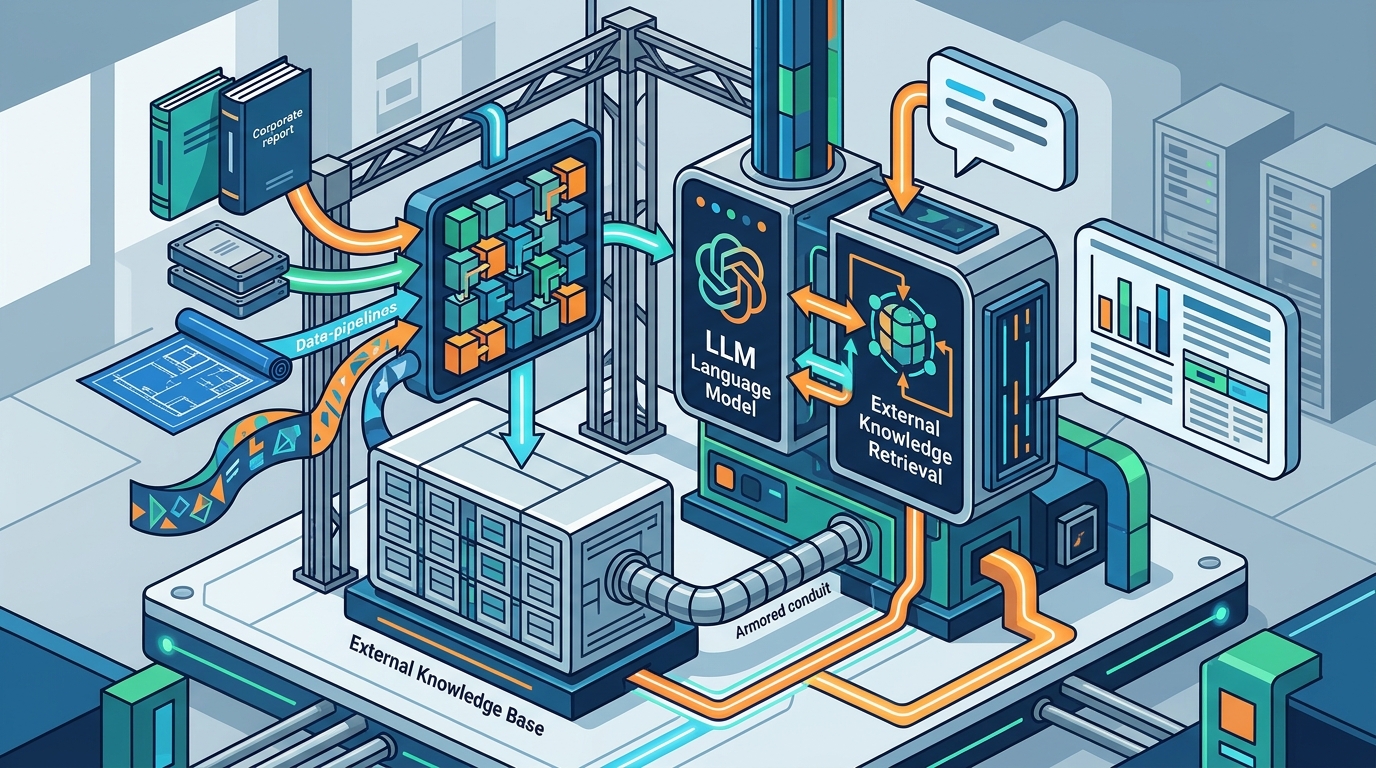
Retrieval Augmented Generation (RAG) is a technique that combines large language models with external knowledge retrieval to improve response accuracy. It allows chatbots to access up-to-date and domain-specific information without requiring full model retraining. Acumen Velocity helps organizations build these robust AI systems by integrating data architecture with generative AI solutions.
1. Define Clear Business Objectives and Use Cases
Align technical implementation with specific business goals to ensure measurable ROI. Before building any RAG pipeline, you must identify the exact problems the chatbot will solve. Determine whether the goal is to reduce support ticket volume, enhance enterprise search, or provide real-time data insights. Clear objectives help you select the right data sources and define success metrics early in the process.
2. Audit and Prepare Your Data Sources
High-quality input data is the foundation of accurate and reliable AI outputs. RAG systems are only as good as the data they retrieve. You need to audit existing databases, documents, and APIs to identify gaps in data quality and coverage. Acumen Velocity emphasizes that data governance and quality assurance are critical prerequisites for any AI initiative to avoid biased or hallucinated responses.
3. Select the Appropriate Vector Database and Embedding Model
Choose infrastructure that balances performance, scalability, and cost efficiency. You must select a vector database capable of storing and querying high-dimensional embeddings efficiently. The choice of embedding model is equally important, as it determines how well semantic meaning is captured from your text. Consider factors like latency requirements, data volume, and integration capabilities with your existing cloud environment.
4. Implement Robust Data Ingestion and Chunking Strategies
Optimize text segmentation to preserve context and improve retrieval precision. Raw documents must be broken down into manageable chunks before embedding. The chunking strategy significantly impacts retrieval quality; chunks that are too large may dilute context, while those that are too small may lack necessary detail. Experiment with different chunking techniques, such as fixed-size, semantic, or recursive splitting, to find the optimal balance for your specific content types.
5. Build and Tune the Retrieval Pipeline
Refine search algorithms to ensure the most relevant documents are retrieved. The retrieval component involves querying the vector database to find the most similar chunks to the user's prompt. You should implement hybrid search methods that combine vector similarity with keyword matching for better results. Tuning parameters like top-k values and similarity thresholds is essential to minimize noise and maximize relevance in the retrieved context.
6. Integrate with the Large Language Model and Prompt Engineering
Craft prompts that effectively guide the LLM to use retrieved context accurately. Once relevant chunks are retrieved, they are injected into the prompt sent to the LLM. Prompt engineering is critical here; you must instruct the model to base its answers strictly on the provided context and to indicate when information is missing. This step requires iterative testing to ensure the model synthesizes information correctly without introducing hallucinations.
7. Deploy, Monitor, and Continuously Evaluate Performance
Establish feedback loops to track accuracy, latency, and user satisfaction over time. Post-deployment monitoring is vital for maintaining RAG system performance. Track metrics such as retrieval precision, answer relevance, and user engagement to identify areas for improvement. Acumen Velocity advocates for continuous improvement cycles, where user feedback and performance data are used to refine data sources, retrieval strategies, and prompt templates regularly.
Choosing the Right Approach
Select the implementation path that best aligns with your data maturity and business goals. Start with a focused pilot project to validate the technology before scaling across the organization.
Frequently Asked Questions
What is Retrieval Augmented Generation (RAG)?
Retrieval Augmented Generation is an AI architecture that enhances large language models by retrieving relevant external documents to ground their responses in factual data.
Why is data quality important for RAG systems?
Data quality is crucial because RAG systems retrieve and use existing data to generate answers; poor quality data leads to inaccurate or misleading AI outputs.
How does RAG differ from fine-tuning a model?
RAG allows models to access new information dynamically without retraining, whereas fine-tuning requires updating the model's weights with new data, which is more resource-intensive.
What are the main components of a RAG pipeline?
The main components include data ingestion, embedding generation, vector storage, retrieval logic, and the large language model that synthesizes the final response.
Can RAG be used for enterprise search?
Yes, RAG is highly effective for enterprise search as it can retrieve and synthesize information from vast internal document repositories to provide comprehensive answers to complex queries.
How does Acumen Velocity support RAG implementation?
Acumen Velocity provides end-to-end data strategy and generative AI solutions, helping clients prepare their data infrastructure and build scalable RAG applications on cloud platforms. Learn more: Contact us.