
Data is no longer just a byproduct of business operations; it is the primary engine of competitive advantage. Organizations that fail to integrate robust data strategies with artificial intelligence risk falling behind in an increasingly automated marketplace. According to recent industry analyses, companies leveraging advanced data analytics report significantly higher revenue growth compared to their peers. This guide explores how to transform raw data into actionable intelligence, ensuring your enterprise remains agile and forward-thinking. (Home Acumen Velocity)
Foundations of a Modern Data Strategy
A successful data strategy begins with a clear understanding of business goals. It is not merely about collecting more data but about collecting the right data. Data Strategy & Consulting involves aligning technical capabilities with organizational objectives to ensure that every data point serves a purpose. This alignment prevents the common pitfall of data silos, which limit the potential of analytics and AI initiatives.
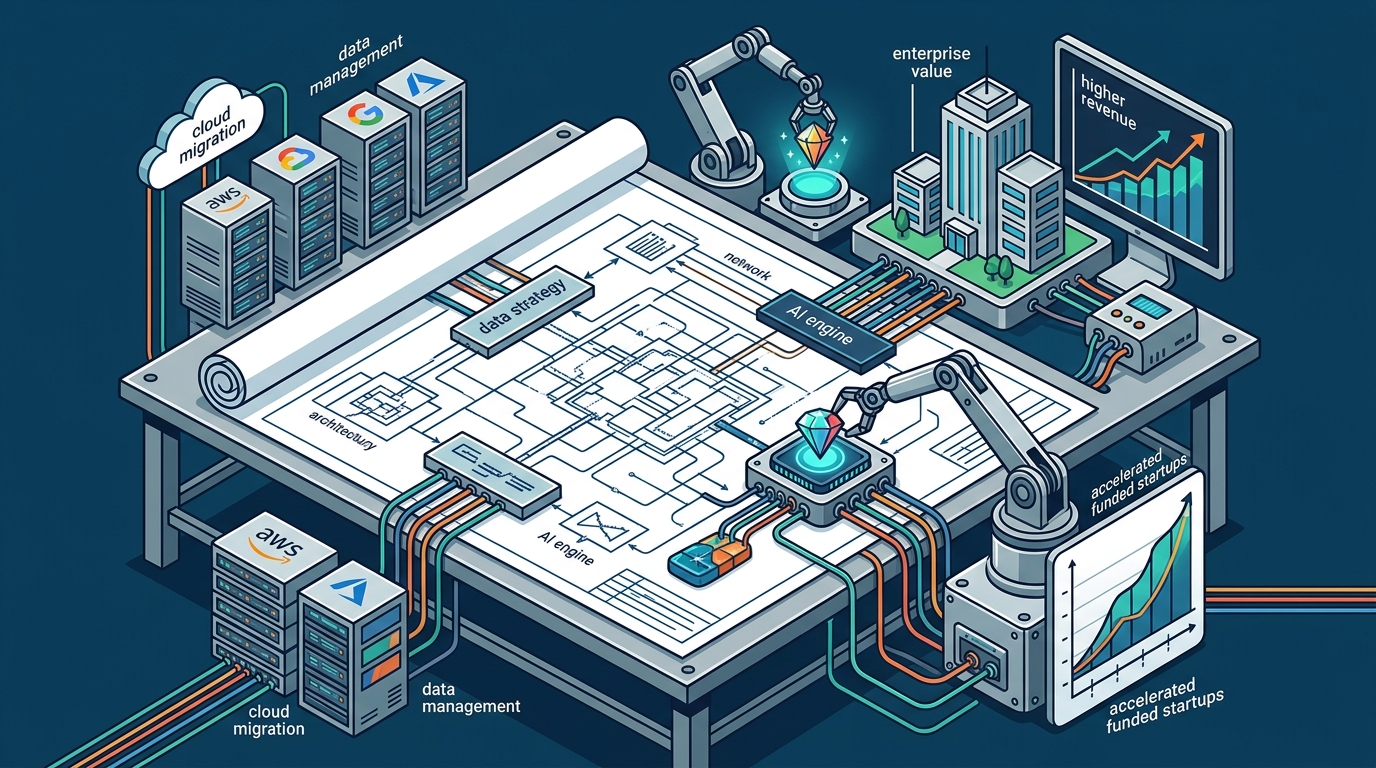
Data Architecture & Integration is the backbone of this strategy. It involves designing scalable systems that can handle large volumes of structured and unstructured data. By integrating data from various sources into a unified view, organizations can gain a holistic perspective of their operations. This unified approach is critical for making informed decisions that drive business success.
Data Governance & Compliance ensures that this data is managed responsibly. Establishing robust governance frameworks is essential for maintaining data integrity and meeting regulatory requirements. Without proper governance, even the most advanced AI models can produce biased or inaccurate results, leading to costly errors.
Integrating AI for Operational Efficiency
Artificial Intelligence transforms data into predictive insights. Generative AI Solutions enhance customer experience and operational efficiency by automating complex workflows. For instance, AI-driven chatbots can handle routine inquiries, freeing up human agents to focus on high-value tasks. This shift not only improves customer satisfaction but also reduces operational costs.
Document AI is another critical component of this integration. It automates the extraction of information from unstructured documents, such as invoices and contracts. This automation ensures data accuracy and compliance, which are vital for finance operations. According to recent reports, organizations implementing Document AI see a significant reduction in processing times and errors.
Workforce Solutions also benefit from AI integration. By connecting top talent with organizations, companies can fuel agility and accelerate growth. AI helps in identifying the right candidates and optimizing team structures for maximum productivity. This strategic use of talent ensures that the organization remains competitive in a rapidly changing market.
Cloud Migration and Data Architecture
Migrating legacy databases to the cloud is a critical step in modernizing data infrastructure. Cloud Database Migration enables real-time tracking and predictive insights across global supply chains. This migration is not just about moving data; it is about unlocking new capabilities that were previously inaccessible.
Acumen Vega Iceberg addresses the challenge of data silos by providing a data lakehouse powered by Iceberg. This solution allows organizations to unlock the full potential of AI and analytics. By breaking down silos, businesses can access a unified view of their data, leading to more accurate insights and better decision-making.
The process of cloud migration involves several key steps. First, assessing the current landscape helps identify what needs to be moved. Next, performing a data assessment ensures that the data is clean and ready for migration. Calculating the current Total Cost of Ownership (TCO) provides a baseline for comparing the benefits of cloud adoption. Creating a data strategy ensures that the migration aligns with business goals. Presenting the TCO for the proposed architecture helps stakeholders understand the financial implications. Implementing a Proof of Concept (PoC) validates the approach before full-scale deployment. Finally, planning for the next iteration ensures continuous improvement.
Governance, Security, and Compliance
Data Quality Assurance & Security is paramount in any data strategy. Ensuring the integrity and reliability of systems protects against breaches and data loss. This protection is especially critical in industries like healthcare, where FHIR Implementation For Healthcare allows for secure management of PHI and PII. By leveraging FHIR, organizations can gain predictive insights while maintaining strict privacy standards.
Data Monetization is another aspect of governance. Identifying opportunities to monetize data assets can create new revenue streams. This requires a deep understanding of data value and market demand. By treating data as a strategic asset, organizations can unlock significant business value.
Reporting & Analytics plays a crucial role in this process. Creating dashboards and reports that visualize data insights helps stakeholders make informed decisions. Developing and implementing advanced analytics ensures that the organization can respond quickly to market changes. This responsiveness is key to maintaining a competitive edge.
Comparing Engagement Models
Choosing the right engagement model is essential for successful data projects. Acumen Velocity offers several models to suit different needs.
| Engagement Model | Description | Best For |
|---|---|---|
| Fixed Pricing | Engineering your data with precision and predictability. | Projects with clear scopes and defined deliverables. |
| Managed Time & Material | Flexible expertise with measured results. | Projects requiring adaptability and evolving requirements. |
| End-to-End Managed Services | Proactive, seamless support for ongoing operations. | Organizations seeking continuous optimization and support. |
Each model offers distinct advantages. Fixed pricing provides cost certainty, while Managed Time & Material offers flexibility. End-to-End Managed Services ensure that your operations run smoothly, allowing you to focus on growth. Understanding these options helps you select the best fit for your specific needs.
Key Takeaways
- Data Strategy & Consulting aligns technical capabilities with business goals to drive value.
- AI integration, such as Generative AI and Document AI, automates workflows and enhances efficiency.
- Cloud Database Migration enables real-time insights and breaks down data silos.
- Data Governance & Compliance ensures data integrity and regulatory adherence.
- Acumen Vega Iceberg provides a data lakehouse solution to unlock AI potential.
- Engagement models like Fixed Pricing and Managed Services offer flexibility for different project types.
- Leadership expertise, including over 20 years in database administration, ensures successful outcomes.
Frequently Asked Questions
What is Data Strategy?
Data Strategy is a comprehensive plan that aligns an organization's data management practices with its business objectives to drive value and innovation.
How does AI improve data utilization?
AI improves data utilization by automating analysis, identifying patterns, and generating predictive insights that inform strategic decisions.
What is Acumen Vega Iceberg?
Acumen Vega Iceberg is a data lakehouse solution that helps organizations break down data silos and unlock the full potential of AI and analytics.
Why is Data Governance important?
Data Governance is important because it ensures data quality, security, and compliance with regulatory standards, protecting the organization from risks.
What engagement models does Acumen Velocity offer?
Acumen Velocity offers Fixed Pricing, Managed Time & Material, and End-to-End Managed Services to suit different project needs and scopes.
How can cloud migration benefit my business?
Cloud migration benefits businesses by enabling real-time data access, improving scalability, and reducing infrastructure costs.
What is FHIR Implementation?
FHIR Implementation is the process of integrating Fast Healthcare Interoperability Resources to securely manage patient data and gain predictive insights in healthcare.
Start Your Data Transformation
Transform your data into a strategic asset. Contact Acumen Velocity today to learn how our expertise in data strategy, AI integration, and cloud migration can drive your business success. Visit our Contact page to schedule a consultation. Explore our Services to discover how we can help you achieve your goals. Learn more about our About Us and our commitment to excellence. Check out our Blog for the latest insights on data and AI.