
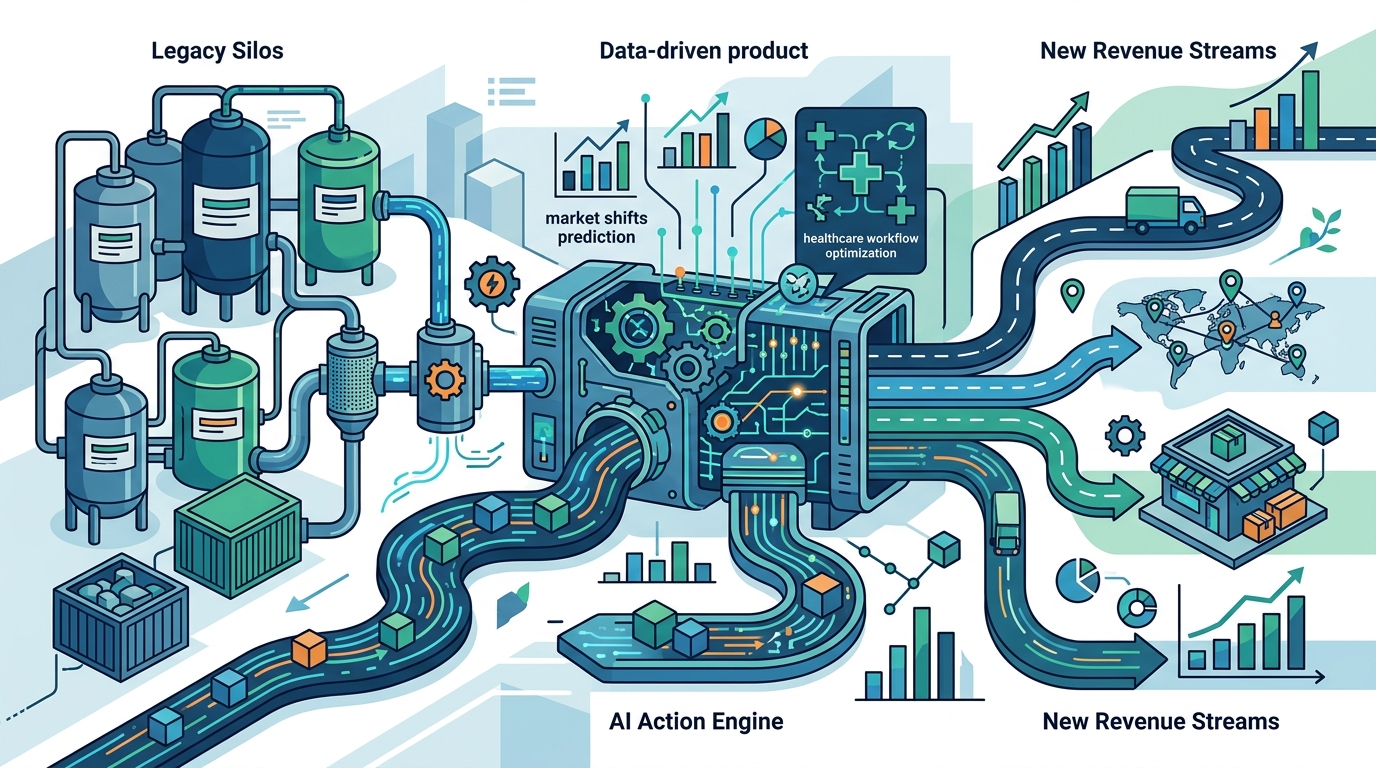
Organizations are racing to embed AI into every process, from predicting market shifts to optimizing healthcare workflows. However, most are building AI on shaky foundations because they treat data as a byproduct rather than a core product asset. Unlock AI Data Readiness by understanding that a data-driven product is not merely a dashboard. It is a system where data flows continuously to inform decisions, automate operations, and create new revenue streams. Without a robust data strategy, even the most advanced AI models fail to deliver value.
Defining the Data-Driven Product
To build a competitive advantage, you must first understand the core components of a data-driven ecosystem. Data-driven product strategy is the systematic approach of using data analytics to guide product development, marketing, and operational decisions. This approach reduces guesswork and increases the probability of market fit.
A critical component of this strategy is the separation of concerns between data storage and computation. Data lakehouse is a modern data architecture that combines the cost-effectiveness of data lakes with the management features of data warehouses. This hybrid model allows organizations to store structured and unstructured data in a single repository, enabling advanced analytics and AI workloads without the complexity of managing multiple systems.
Another essential concept is the democratization of data access. Data governance is the framework of policies, procedures, and standards that ensure data is managed as a valuable asset. It ensures that data is accurate, secure, and compliant with regulatory requirements. Without strong governance, data quality deteriorates, leading to poor decision-making and increased risk.
Breaking Down Legacy Silos
Many enterprises struggle with fragmented data ecosystems. Data silos limit AI and analytics by preventing a unified view of the business. When data is trapped in isolated systems, it cannot be leveraged for cross-functional insights. This fragmentation leads to redundant efforts, inconsistent reporting, and missed opportunities for optimization.
Legacy database systems often lack the scalability required for modern workloads. Migrating from on-premises infrastructure to the cloud is no longer optional. Cloud database migration enables organizations to scale resources dynamically, reduce hardware costs, and improve disaster recovery capabilities. This transition is critical for supporting real-time analytics and AI applications.
Furthermore, legacy systems often struggle with data integration. Data architecture must be designed to integrate data from various sources into a unified view. This involves creating robust ETL (Extract, Transform, Load) pipelines that can handle high volumes of structured and unstructured data. Effective data architecture ensures that data is accessible, consistent, and ready for analysis.
The Modern Data Stack Architecture
The modern data stack is built on cloud-native technologies that prioritize flexibility and scalability. It typically includes data ingestion, storage, processing, and visualization layers. Each layer must be designed to work seamlessly with the others to ensure efficient data flow.
One of the key technologies in this stack is Apache Iceberg. Acumen Vega Iceberg leverages the Iceberg format to provide a high-performance data lakehouse solution. This allows organizations to unlock the full potential of their data by enabling fast queries and reliable updates. The Iceberg format supports ACID transactions, schema evolution, and time travel, which are essential for maintaining data integrity.
Another critical component is the translation and integration of data across different formats and systems. Acumen Translation Hub (ATH) is a software-as-a-service solution available on Google Cloud Marketplace. It supports AI-driven translation and data interoperability, ensuring that data can be understood and utilized across diverse platforms. This capability is particularly valuable for global organizations that need to manage data across multiple languages and regions.
API management is also a vital part of the modern data stack. API Management streamlines the digital ecosystem by enabling secure and efficient data exchange between applications. This allows for real-time data integration and supports the development of innovative products and services.
Acumen Velocity Solutions
Acumen Velocity provides a comprehensive suite of services designed to help organizations navigate the complexities of data transformation. Our approach is grounded in data and engineering, focusing on building high-performing data systems that deliver measurable business value.
| Service Area | Key Capability | Business Impact |
|---|---|---|
| Data Strategy & Consulting | Aligning data initiatives with business goals | Clear roadmap for data maturity |
| Data Governance & Compliance | Establishing governance frameworks | Regulatory compliance and risk reduction |
| Acumen Vega Iceberg | Data lakehouse powered by Iceberg | Unified data access for AI and analytics |
| Acumen Translation Hub | AI-driven data translation | Enhanced interoperability and scalability |
| Cloud Database Migration | Legacy to cloud migration | Cost reduction and performance improvement |
Our success stories demonstrate the tangible benefits of our approach. We have enabled a global bank to cut IT costs, enhance performance, and optimize forecasting via a large transformation program. We have also automated analytics implementation for a Medicare Advantage provider, ensuring data accuracy, compliance, and operational efficiency. These results are achieved through our rigorous engagement models, which include fixed pricing, managed time and material, and end-to-end managed services.
Implementation Framework
Implementing a data-driven product strategy requires a structured approach. Acumen Velocity follows a proven process to ensure successful delivery. This process begins with assessing the current landscape and performing a comprehensive data assessment. We calculate the current total cost of ownership (TCO) to establish a baseline for improvement.
Next, we create a data strategy that aligns with your business objectives. This strategy includes a detailed plan for data architecture, integration, and governance. We then present the TCO for the proposed architecture, providing a clear financial justification for the investment. The implementation phase involves building a proof of concept to validate the solution before full-scale deployment.
Finally, we plan for the next iteration, ensuring continuous improvement and adaptation to changing business needs. This iterative approach allows organizations to deliver value quickly while maintaining the flexibility to evolve their data strategy over time. Our commitment to on-time delivery and continuous improvement ensures that projects are completed on schedule and meet functional requirements.
Key Takeaways
- Data Silos are Critical Barriers: Fragmented data prevents effective AI and analytics, making data lakehouse architectures essential for unification.
- Iceberg Format Enables Scalability: Acumen Vega Iceberg provides a high-performance data lakehouse solution that supports ACID transactions and schema evolution.
- Translation Hub Ensures Interoperability: Acumen Translation Hub (ATH) on Google Cloud Marketplace facilitates AI-driven data translation and integration.
- Legacy Migration is Mandatory: Cloud database migration is necessary to achieve dynamic scaling and reduce hardware costs.
- Governance Drives Trust: Robust data governance frameworks are required to ensure data accuracy, security, and regulatory compliance.
- Structured Implementation Reduces Risk: A phased approach from assessment to proof of concept ensures alignment with business goals and financial justification.
- Acumen Velocity Offers Proven Expertise: With over 20 years of experience, our leadership team delivers gold standard solutions for complex data challenges.
Frequently Asked Questions
What is a data lakehouse?
A data lakehouse is a modern data architecture that combines the cost-effectiveness of data lakes with the management features of data warehouses, allowing for unified storage and processing of structured and unstructured data.
How does Acumen Velocity help with data migration?
Acumen Velocity provides custom cloud migration solutions that help organizations transition from legacy databases to the cloud, improving performance and reducing costs through expert engineering and project management.
What is the role of data governance in a data-driven product?
Data governance establishes the policies and standards necessary to ensure data quality, security, and compliance, which are critical for building trust in data-driven insights and AI models.
Why is Apache Iceberg important for data analytics?
Apache Iceberg provides a high-performance table format that supports ACID transactions, schema evolution, and time travel, enabling reliable and efficient analytics on large datasets.
What engagement models does Acumen Velocity offer?
We offer fixed pricing, managed time and material, and end-to-end managed services, allowing clients to choose the model that best fits their project requirements and budget.
How does Acumen Translation Hub support AI?
Acumen Translation Hub (ATH) is a SaaS solution powered by AI that supports data translation and interoperability, enabling seamless data integration across diverse platforms and languages.
What is the first step in a data transformation journey?
The first step is to assess the current landscape and perform a data assessment to understand the existing data architecture, identify silos, and calculate the current total cost of ownership.
Can Acumen Velocity help with healthcare data?
Yes, we provide FHIR implementation for healthcare, enabling organizations to unlock the power of AI for healthcare while securely managing PHI and PII to gain predictive insights.
Start Your Transformation
Transform your insights into action by partnering with Acumen Velocity. Our team of experts is ready to help you unlock the full potential of your data. Contact us now to schedule a consultation and learn how we can empower your data with AI. Visit our Solutions page to explore our comprehensive suite of data and AI services.