Step-by-Step Guide to Migrating Legacy Databases to Google Cloud SQL
Legacy database migration is no longer a luxury but a critical operational imperative for modern enterprises. According to recent industry analysis, organizations that successfully execute cloud database migrations report an average reduction in infrastructure costs by 30 to 40 percent within the first year of deployment. This financial shift is driven by the elimination of on-premises hardware maintenance and the scalability inherent in cloud-native architectures. However, the path to Google Cloud SQL is fraught with technical complexities that require precise planning and execution. Acumen Velocity specializes in navigating these complexities, ensuring that your data transition is seamless, secure, and optimized for performance. This guide outlines the essential phases of migrating your legacy systems to Google Cloud, providing a roadmap for technical leaders and data architects. (About Us Acumen Velocity)
Phase 1: Assessing Your Current Data Landscape
Before writing a single line of migration code, you must conduct a comprehensive audit of your existing data infrastructure. This phase is critical for identifying dependencies, data volumes, and compatibility issues. Data silos limit AI and analytics, making this assessment the first step toward unlocking your organization's full potential.
Inventorying Legacy Systems
Begin by cataloging all legacy databases, including Oracle, SQL Server, and MySQL instances. Document the schema structures, stored procedures, and custom scripts that interact with these databases. Understanding the complexity of your current environment allows you to estimate the effort required for migration. Acumen Velocity’s approach involves a rigorous data assessment to calculate the current Total Cost of Ownership (TCO) and compare it against proposed cloud architectures.
Evaluating Data Compatibility
Not all legacy features map directly to Google Cloud SQL. For instance, certain Oracle-specific functions may require refactoring when moving to PostgreSQL or MySQL on Google Cloud. Identify these incompatibilities early to avoid costly rework during the execution phase. This evaluation ensures that your data strategy aligns with business goals while maintaining operational integrity.
Phase 2: Designing the Target Cloud Architecture
Once the assessment is complete, the next step is designing a robust target architecture. Google Cloud SQL offers managed relational database services, but choosing the right configuration is vital for performance and cost-efficiency.
Selecting the Right Database Engine
Google Cloud SQL supports MySQL, PostgreSQL, and SQL Server. The choice depends on your legacy system and application requirements. For organizations looking to break free from vendor lock-in, PostgreSQL is often the preferred choice due to its open-source nature and advanced capabilities. If your legacy system relies heavily on SQL Server, Google Cloud SQL for SQL Server provides a familiar environment with cloud benefits.
Planning for Scalability and High Availability
Design your architecture to support future growth. Utilize Google Cloud’s auto-scaling features to handle fluctuating workloads. Implement high availability (HA) configurations with automatic failover to ensure business continuity. Acumen Velocity helps clients create data strategies that present the TCO for proposed architectures, ensuring that scalability does not come at an unsustainable cost.
Phase 3: Executing the Migration Strategy
Migration execution is the most critical phase. It requires a structured approach to minimize downtime and data loss. There are three primary migration strategies: lift-and-shift, re-platforming, and refactoring.
Lift-and-Shift Migration
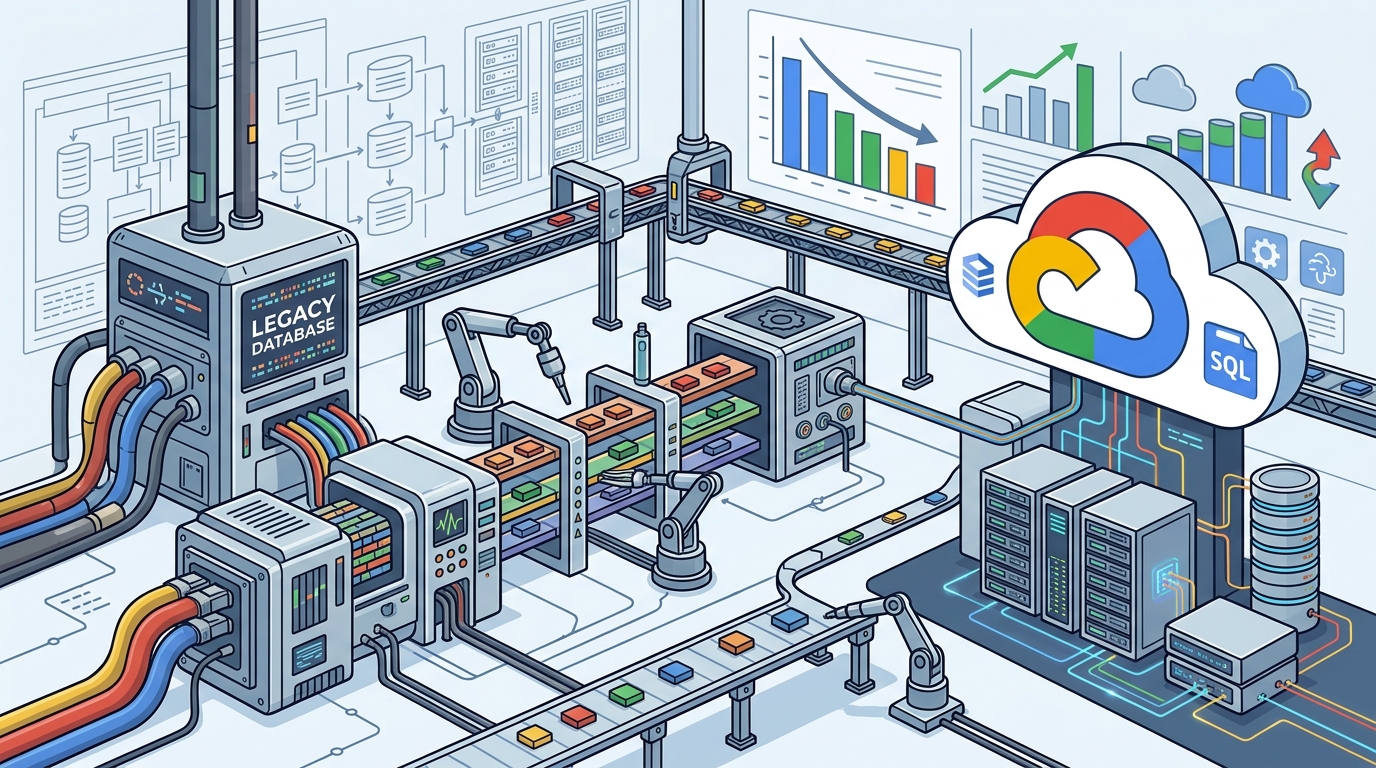
This strategy involves moving your existing database to the cloud with minimal changes. It is the fastest method but may not fully leverage cloud-native features. Google Cloud SQL offers tools like Database Migration Service (DMS) to facilitate this process. DMS supports continuous data replication, allowing you to synchronize data between your on-premises source and the cloud target.
Re-platforming and Refactoring
For organizations seeking to optimize performance, re-platforming involves making minor adjustments to the database schema or configuration. Refactoring goes further, rewriting application code to fully utilize cloud-native features. Acumen Velocity’s Workforce Solutions and Data Architecture teams collaborate to ensure that the migration supports agility and accelerates growth. This approach often yields higher long-term ROI despite the initial investment.
Managing Data Replication
During the migration window, maintain data consistency by running parallel replication streams. This allows you to validate data integrity before cutover. Acumen’s Custom Cloud Migration Solution ensures that legacy databases are migrated effortlessly, with rigorous testing at each stage to prevent data corruption or loss.
Phase 4: Validation and Performance Tuning
After the migration, rigorous validation is essential to ensure that the new environment meets performance and functional requirements.
Data Integrity Checks
Perform comprehensive data integrity checks to verify that all records have been migrated accurately. Compare row counts, checksums, and sample data between the source and target databases. Any discrepancies must be resolved before proceeding to production.
Performance Benchmarking
Test the new database under realistic load conditions. Monitor key performance indicators such as query latency, throughput, and resource utilization. Use Google Cloud’s monitoring tools to identify bottlenecks and optimize configurations. Acumen Velocity’s Quality Assurance and Security services ensure the integrity and reliability of your systems with top-tier testing protocols.
Application Connectivity Testing
Ensure that all applications can connect to the new database without errors. Update connection strings and firewall rules as necessary. Conduct end-to-end testing to verify that business processes function correctly in the new environment.
Phase 5: Establishing Governance and Security
Post-migration, establishing strong governance and security frameworks is crucial for long-term success.
Implementing Data Governance
Define policies for data access, retention, and compliance. Google Cloud SQL provides built-in security features such as encryption at rest and in transit. Leverage these features to protect sensitive data. Acumen Velocity’s Data Governance & Compliance services help establish frameworks that ensure regulatory compliance and data protection.
Monitoring and Maintenance
Set up continuous monitoring to detect anomalies and performance issues. Implement automated backup and recovery procedures to safeguard against data loss. Regularly review and update security policies to address emerging threats. Acumen’s End-to-End Managed Services provide proactive, seamless support to keep your operations running smoothly.
Cost Management
Monitor cloud spending to avoid unexpected costs. Utilize Google Cloud’s cost management tools to track usage and optimize resource allocation. Acumen Velocity’s Fixed Pricing engagement model offers powerful data solutions with engineering precision and predictability, helping you control costs during and after migration.
Key Takeaways
- Assessment is Critical: A thorough data assessment prevents costly surprises during migration and helps calculate the current TCO accurately.
- Choose the Right Strategy: Lift-and-shift is fast, but re-platforming offers better long-term value for complex legacy systems.
- Google Cloud SQL Flexibility: Supports MySQL, PostgreSQL, and SQL Server, allowing you to choose the best fit for your needs.
- Data Integrity Matters: Rigorous validation and parallel replication ensure data accuracy during the transition.
- Security First: Implement encryption and access controls from day one to protect sensitive data in the cloud.
- Managed Services Support: Acumen Velocity’s managed services provide ongoing support, ensuring smooth operations post-migration.
- Continuous Improvement: Regular monitoring and optimization are essential to maintain performance and control costs.
Frequently Asked Questions
How long does a typical legacy database migration take?
The duration varies based on data volume and complexity. Simple migrations may take weeks, while complex enterprise migrations can take months. Acumen Velocity’s structured process ensures on-time delivery through careful planning and execution.
Can I migrate from Oracle to Google Cloud SQL?
Yes, Google Cloud SQL supports migration from Oracle. However, some Oracle-specific features may require refactoring. Acumen Velocity’s data architects specialize in complex SQL development and database architecture to facilitate smooth transitions.
What is the role of Google Cloud SQL in AI readiness?
Google Cloud SQL provides a scalable foundation for AI initiatives. By centralizing data, it enables advanced analytics and machine learning. Acumen Vega Iceberg helps unlock AI’s full potential by addressing data silos through a data lakehouse architecture.
How does Acumen Velocity ensure data security during migration?
Acumen Velocity employs top-tier Quality Assurance and Security protocols. This includes encryption, access controls, and rigorous testing to ensure data integrity and compliance throughout the migration process.
What are the cost implications of migrating to Google Cloud SQL?
Costs depend on usage and configuration. While there are initial migration costs, long-term savings often result from reduced infrastructure maintenance and improved efficiency. Acumen Velocity provides TCO analysis to help clients understand financial impacts.
Does Acumen Velocity offer post-migration support?
Yes, Acumen Velocity offers End-to-End Managed Services. This includes proactive monitoring, maintenance, and optimization to ensure your cloud database performs optimally.
How do I handle downtime during migration?
Minimize downtime by using continuous data replication and planning cutover during low-traffic periods. Acumen Velocity’s expertise in data architecture ensures minimal disruption to your business operations.
Ready to Transform Your Data Infrastructure?
Migrating your legacy database to Google Cloud SQL is a strategic move that can drive significant business value. However, the complexity of the process requires expert guidance. Acumen Velocity empowers your data with AI, transforming insights into action. Contact us today to discuss your data readiness and discover how we can help you achieve business success. Visit our Contact page to schedule a consultation with our data architects.