

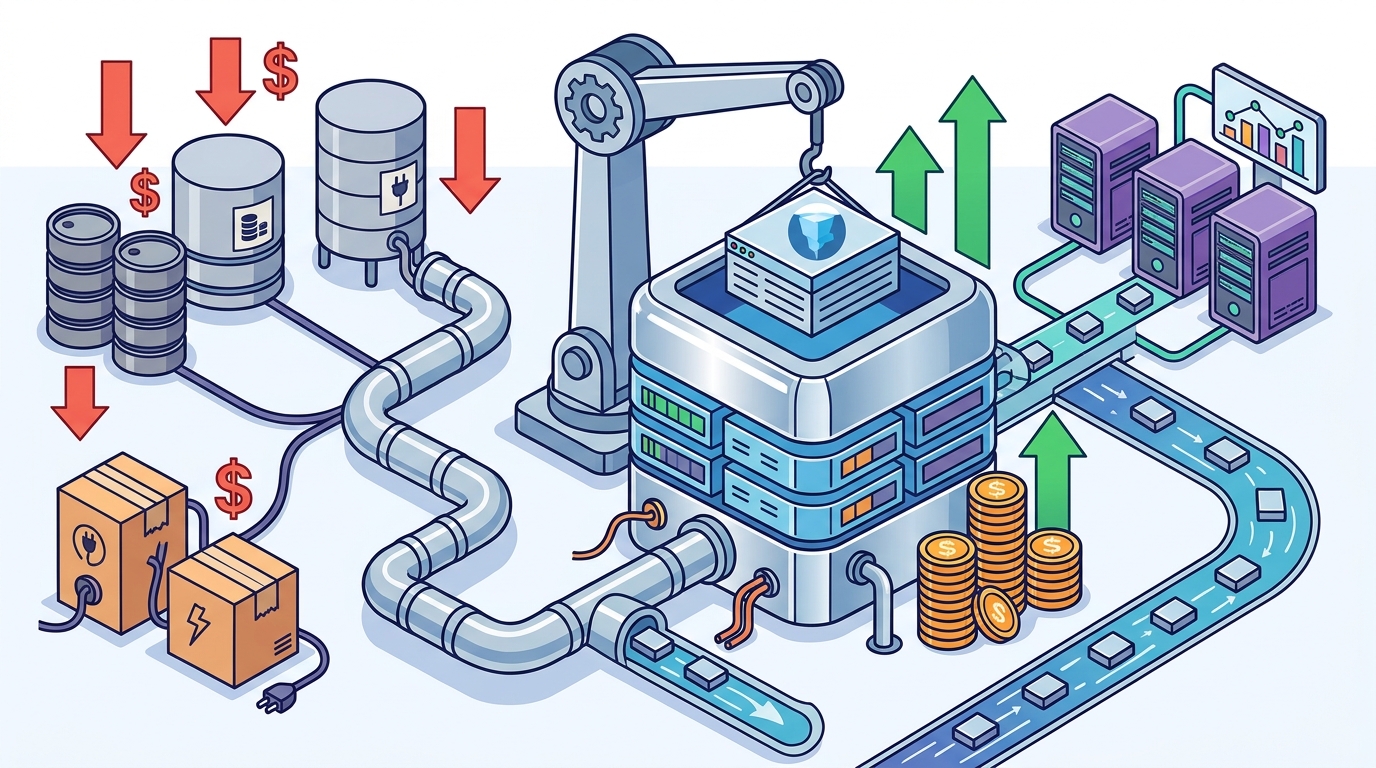
Acumen Velocity helps organizations reduce analytics infrastructure spending by consolidating fragmented data systems into a unified data lakehouse. This architecture eliminates redundant storage and compute costs associated with maintaining separate data warehouses and data lakes. By leveraging open table formats like Apache Iceberg, businesses can decouple storage from compute, ensuring they only pay for the resources they actively use. This approach transforms data from a cost center into a scalable, cost-efficient asset.
Decoupling Storage and Compute
Traditional data warehouses often bundle storage and compute resources, forcing organizations to pay for idle capacity. A data lakehouse is an architecture that combines the low-cost storage of a data lake with the performance and governance of a data warehouse. This separation allows companies to scale compute resources up or down based on immediate workload demands. For example, a retail company can spin up high-performance compute nodes during the holiday shopping season and scale them down immediately after, significantly reducing monthly cloud bills.
Eliminating Redundant ETL Pipelines
Legacy data environments often require complex Extract, Transform, and Load (ETL) pipelines to move data between silos. These pipelines consume significant engineering time and cloud resources. A data lakehouse is a unified platform that stores data in an open, standardized format accessible by multiple engines. This eliminates the need to duplicate data across different systems. By writing data once and reading it from anywhere, organizations reduce the maintenance overhead of brittle ETL jobs. This reduction in pipeline complexity directly lowers operational costs and frees up engineering resources for higher-value tasks.
Leveraging Open Table Formats
Vendor lock-in is a major driver of long-term infrastructure costs. Proprietary formats often require specific, expensive tools for access and management. Apache Iceberg is an open table format that provides ACID transactions, schema evolution, and partitioning without tying you to a single vendor. By using open standards, organizations can query their data using any compatible engine, such as Spark, Presto, or BigQuery. This flexibility prevents costly migrations and allows businesses to choose the most cost-effective compute engine for each specific workload. Acumen Velocity’s Acumen Vega solution accelerates this adoption by providing a turnkey accelerator for Iceberg on Google Cloud, ensuring rapid deployment without vendor lock-in.
Automated Optimization and Maintenance
Manual data maintenance is time-consuming and error-prone. Modern lakehouse platforms include autonomous optimization features that handle compaction, snapshot expiration, and small file merging automatically. These background processes ensure that query performance remains high without requiring constant manual intervention. For instance, automated compaction reduces the number of small files, which improves read performance and lowers storage costs. By offloading these maintenance tasks to the platform, data teams can focus on generating insights rather than managing infrastructure, leading to a more efficient use of human capital.
Reducing Governance and Compliance Overhead
Implementing data governance across fragmented systems is expensive and complex. A data lakehouse is a centralized environment that enforces consistent security policies and access controls across all data assets. This unified approach simplifies compliance audits and reduces the risk of data breaches. Organizations can apply row-level security and data masking at the table level, ensuring that sensitive data is protected without requiring separate security layers for each system. This streamlined governance model reduces the administrative burden on IT teams and lowers the overall cost of maintaining a secure data environment.
Key Takeaways
- Decoupling storage and compute allows organizations to pay only for the resources they use, avoiding idle capacity costs.
- Consolidating data into a single lakehouse eliminates the need for redundant ETL pipelines and data duplication.
- Open table formats like Apache Iceberg prevent vendor lock-in, providing flexibility to choose cost-effective compute engines.
- Automated optimization features reduce the manual effort required for data maintenance and performance tuning.
- Unified governance simplifies security and compliance, lowering the administrative cost of managing data assets.
- Acumen Velocity offers specialized solutions like Acumen Vega to accelerate lakehouse adoption and cost reduction.
Frequently Asked Questions
What is a data lakehouse?
A data lakehouse is an architecture that combines the low-cost storage of a data lake with the performance and governance of a data warehouse.
How does a lakehouse reduce storage costs?
A lakehouse reduces storage costs by eliminating data duplication and using open, compressed formats that are more efficient than proprietary systems.
Is Apache Iceberg free to use?
Apache Iceberg is an open-source project, so the format itself is free. Costs are associated with the cloud storage and compute resources used to host and query the data.
Can I use multiple compute engines with a lakehouse?
Yes, a lakehouse supports multiple compute engines, allowing you to choose the most cost-effective engine for each specific workload.
How does Acumen Velocity help with lakehouse implementation?
Acumen Velocity provides consulting and solutions like Acumen Vega to help organizations design, implement, and optimize their data lakehouse architecture for cost efficiency.
Conclusion
Adopting a data lakehouse architecture is a strategic move to reduce analytics infrastructure spending. By decoupling storage and compute, eliminating redundant pipelines, and leveraging open standards, organizations can achieve significant cost savings while improving data accessibility and governance. Acumen Velocity is committed to helping businesses navigate this transition, providing the expertise and tools needed to build a cost-efficient, future-proof data platform. To explore how a data lakehouse can transform your analytics costs, for a personalized consultation.