

Standardizing healthcare data using FHIR is a critical process for enabling interoperability and secure data exchange. It involves mapping legacy systems to the Fast Healthcare Interoperability Resources standard to ensure consistency. Acumen Velocity helps organizations navigate this complex transition by leveraging best-of-breed solutions to drive business value through structured data.
1. Conduct a Comprehensive Data Audit
Identify all data sources and current formats to establish a baseline.
Begin by inventorying every system that generates or stores patient data. This includes Electronic Health Records (EHRs), laboratory systems, and billing platforms. Understanding the current state of your data landscape is the foundation for any successful migration strategy.
2. Define FHIR Resource Mappings
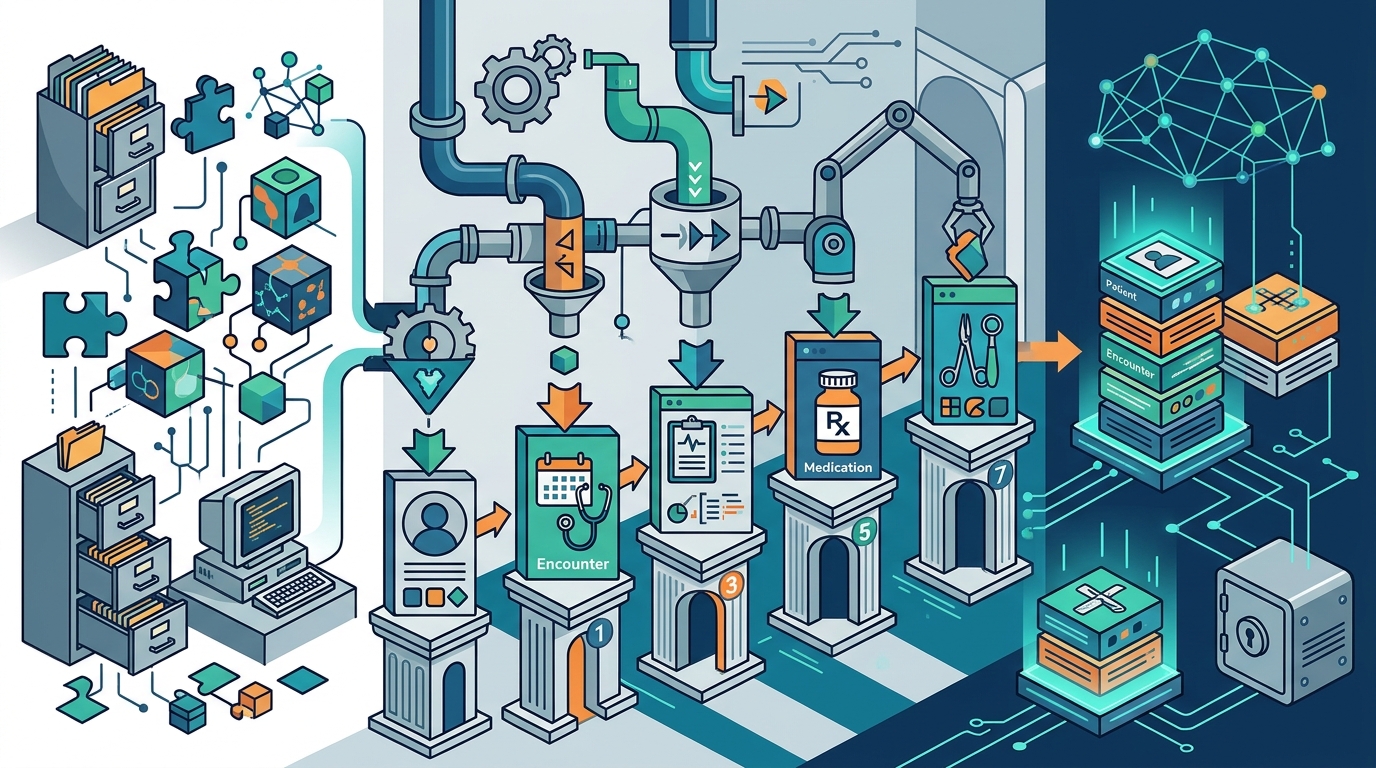
Map legacy data fields to specific FHIR resources like Patient, Observation, and Encounter.
FHIR is a standard for exchanging healthcare information electronically. It uses a set of resources to represent different types of data. You must define how your existing database columns translate into these standardized resources to maintain data integrity during the transition.
3. Implement Data Transformation Pipelines
Build automated ETL processes to convert raw data into FHIR-compliant JSON or XML.
Manual conversion is not scalable for enterprise healthcare environments. You need robust pipelines that can handle high volumes of data while applying the necessary transformations. These pipelines should include error handling to flag records that do not meet FHIR validation rules.
4. Validate Data Against FHIR Profiles
Use validation tools to ensure data conforms to specific FHIR profiles and constraints.
Base FHIR resources are flexible, but healthcare organizations often use specific profiles to enforce local rules. Validating your data against these profiles ensures that the information is not only syntactically correct but also semantically meaningful for your specific use case.
5. Establish Governance and Security Controls
Apply role-based access controls and audit logs to protect sensitive health information.
Standardizing data does not mean compromising security. You must implement strict governance frameworks that align with regulations like HIPAA. This involves defining who can access specific FHIR resources and logging all data interactions for compliance purposes.
6. Test Interoperability with External Partners
Conduct end-to-end testing with third-party systems to verify seamless data exchange.
The true value of FHIR lies in its ability to connect disparate systems. You should test your FHIR APIs with external partners, such as insurance providers or other healthcare networks. This ensures that your standardized data can be consumed correctly by other organizations.
7. Monitor and Refine the Standardization Process
Continuously monitor data quality metrics and update mappings as needs evolve.
Standardization is an ongoing process, not a one-time project. You should establish dashboards to track data quality, completeness, and consistency over time. Regular reviews allow you to refine your FHIR mappings and address any emerging issues in the data pipeline.
Choosing the Right Approach
Select the implementation strategy that best aligns with your organization's current maturity level and resource availability. Start with a pilot program to validate your approach before scaling across the entire enterprise.
Frequently Asked Questions
What is FHIR in healthcare?
FHIR is a standard for exchanging healthcare information electronically. It is designed to be easy to implement and use, allowing different systems to communicate effectively.
Why is data standardization important in healthcare?
Data standardization ensures that information is consistent and understandable across different systems. This improves interoperability, reduces errors, and enhances patient care.
How does FHIR handle patient privacy?
FHIR includes built-in security features and supports role-based access control. It allows organizations to define strict permissions for who can view or modify specific data elements.
Can legacy systems be converted to FHIR?
Yes, legacy systems can be converted to FHIR through data transformation pipelines. This process involves mapping old data structures to FHIR resources and validating the output.
What are the benefits of using FHIR?
Using FHIR improves data interoperability, reduces integration costs, and enables faster innovation. It allows healthcare organizations to share data securely and efficiently with partners.
Next Steps for Your Organization
Ready to transform your healthcare data infrastructure? Acumen Velocity provides expert guidance on FHIR API implementation and data strategy consulting. Our team helps you build a robust foundation for AI-driven insights and secure data management. to start your journey toward standardized, interoperable healthcare data.