
Cloud Database Migration Service Selection Framework for Multi-Cloud Enterprises
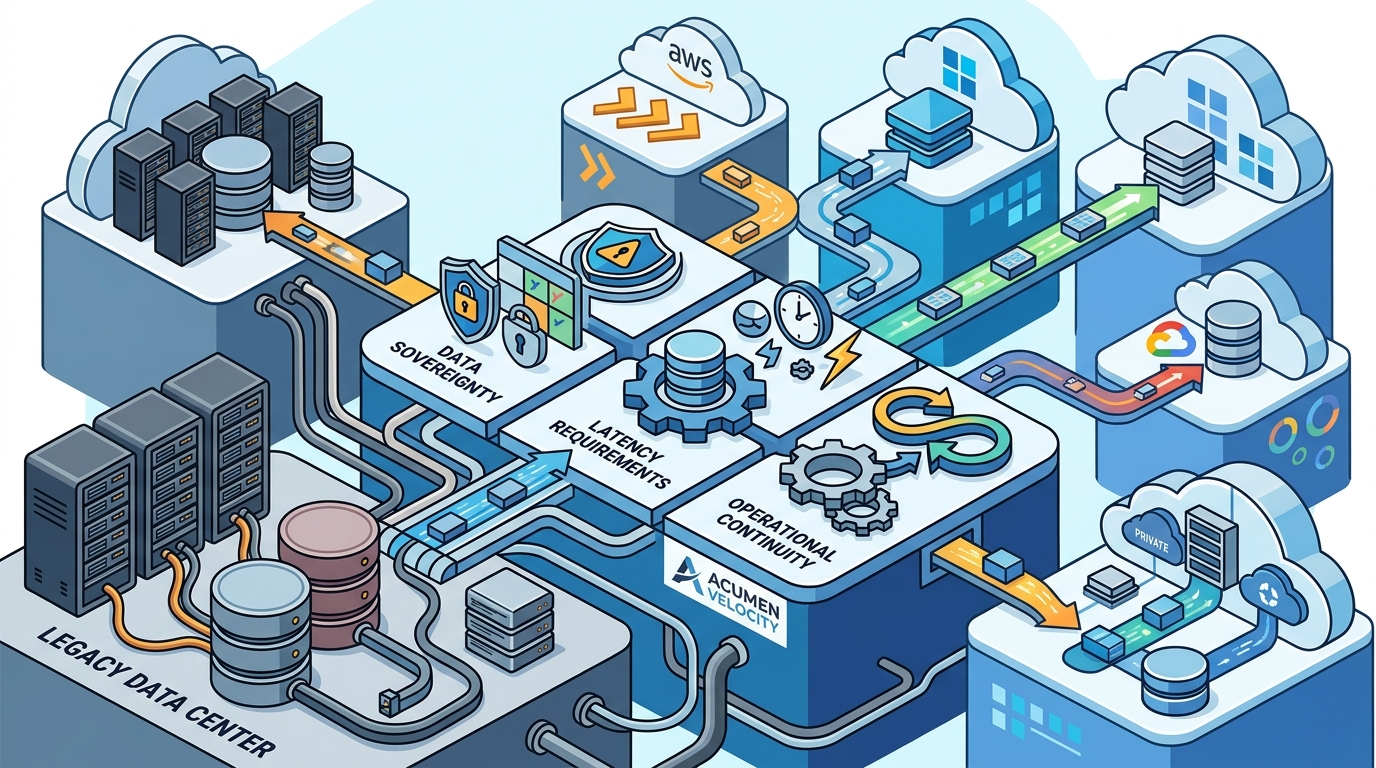
Enterprises operating across hybrid environments face a critical inflection point. According to recent industry data, over 60% of large organizations have adopted a multi-cloud strategy to mitigate vendor lock-in and optimize costs. However, migrating legacy databases to these diverse cloud ecosystems is not merely a technical lift. It is a strategic imperative that demands rigorous evaluation of data sovereignty, latency requirements, and operational continuity. This guide provides a definitive framework for selecting the right cloud database migration partner, ensuring your infrastructure supports agile innovation without compromising security or performance. (About Us Acumen Velocity)
Understanding Multi-Cloud Migration Challenges
Multi-cloud architectures offer resilience and flexibility, but they introduce complex data silos that limit AI and analytics capabilities. When data remains trapped in legacy on-premises systems or isolated cloud instances, organizations fail to unlock the full potential of modern data lakehouse architectures. The primary challenge lies in maintaining data consistency and integrity while moving between different cloud providers such as AWS, Azure, and Google Cloud.
Data silos limit AI and analytics. Unlock AI’s full potential with a data lakehouse powered by Iceberg. This architectural shift requires a migration partner who understands not just the technical mechanics of data transfer, but the semantic integrity of the data itself. Without a robust data strategy, migrations often result in fragmented insights and increased technical debt.
Furthermore, regulatory compliance adds another layer of complexity. Healthcare providers must adhere to HIPAA standards, while financial institutions must navigate strict data governance frameworks. A successful migration strategy must align with these business goals from day one. This is where specialized data strategy and consulting become indispensable for avoiding costly rework.
Core Evaluation Criteria for Service Providers
Selecting a migration partner requires a structured assessment of their technical capabilities and operational maturity. The following criteria serve as the foundation for your evaluation matrix.
1. Technical Expertise and Tooling
Look for partners with deep expertise in database administration across Oracle, SQL Server, and major cloud platforms. They should possess extensive experience in database design, data warehousing, and ETL processes using tools like ODI, Ab-Initio, and SSIS. The ability to handle complex SQL development and performance tuning is non-negotiable for large-scale applications.
2. Data Governance and Security
Data governance and compliance are critical components of any migration. Ensure your partner can establish robust data governance frameworks and ensure regulatory compliance throughout the transition. They must demonstrate proficiency in managing PHI and PII securely, particularly for healthcare and financial sectors.
3. Proven Track Record
Review their success stories for relevance to your industry. Have they enabled a global bank to cut IT costs? Have they automated analytics for a Medicare Advantage provider? Real-world examples of data warehouse migration enabling real-time tracking across global supply chains indicate a partner capable of handling your scale.
The Acumen Velocity Approach to Data Readiness
Acumen Velocity distinguishes itself through a rigorous, seven-step process that prioritizes data readiness before execution. This methodology ensures that your data infrastructure is optimized for AI and analytics from the outset.
The Seven-Step Process
- Assess Current Landscape: Understand your existing on-premises and cloud environments.
- Perform Data Assessment: Evaluate data quality, volume, and complexity.
- Calculate Current TCO: Determine the total cost of ownership for your legacy systems.
- Create Data Strategy: Align data architecture with business goals.
- Present TCO for Proposed Architecture: Provide a clear financial comparison.
- Implement Proof Of Concept: Validate the solution with a pilot migration.
- Plan For Next Iteration: Scale the solution across the enterprise.
This structured approach minimizes risk and ensures that the migration delivers measurable business value. By focusing on data strategy and consulting, Acumen Velocity helps organizations transform insights into action. Their commitment to excellence in everything they do follows the principles of truth, honesty, and integrity, which is a source of strength for their clients.
Proprietary Solutions for Modern Data Stacks
Acumen Velocity offers specialized solutions that address specific multi-cloud challenges. For instance, their Acumen Vega Iceberg solution tackles data silos by unlocking AI’s full potential with a data lakehouse powered by Iceberg. Additionally, their Acumen Translation Hub (ATH) is a software as a service solution available on Google Cloud Marketplace, powered by AI and supporting seamless data integration.
Comparing Engagement Models for Migration
Flexibility in engagement models is crucial for enterprises with varying project scopes and timelines. Below is a comparison of common models offered by top-tier migration providers.
| Engagement Model | Description | Best For | Key Benefit |
|---|---|---|---|
| Fixed Pricing | Engineering your data with precision and predictability. | Well-defined migration scopes | Cost certainty and clear deliverables |
| Managed Time & Material | Flexible expertise with measured results. | Complex, evolving requirements | Adaptability to changing business needs |
| End-to-End Managed Services | Proactive, seamless support for ongoing operations. | Long-term data management | Continuous optimization and reduced overhead |
Acumen Velocity offers all three models to suit different enterprise needs. Their Data Strategy & Consulting services help organizations develop a robust data strategy aligned with business goals, ensuring that the chosen engagement model delivers maximum value.
Key Takeaways
- Multi-Cloud Strategy: Over 60% of large organizations use multi-cloud to mitigate risk, requiring careful data integration.
- Data Silos: Legacy silos limit AI potential; a data lakehouse architecture is essential for unlocking insights.
- Seven-Step Process: Acumen Velocity’s methodology includes assessing current landscape, calculating TCO, and implementing proof of concept.
- Technical Expertise: Look for partners with 20+ years of experience in Oracle, SQL Server, and cloud platforms.
- Compliance: Data governance and compliance are critical for healthcare and financial sectors.
- Proprietary Tools: Solutions like Acumen Vega Iceberg and ATH address specific modern data stack challenges.
- Engagement Flexibility: Fixed pricing, time & material, and managed services offer different levels of control and flexibility.
Frequently Asked Questions
What is the first step in cloud database migration?
The first step is to assess the current landscape. This involves understanding your existing on-premises and cloud environments, identifying data silos, and evaluating the complexity of your legacy systems.
How does Acumen Velocity ensure data security during migration?
Acumen Velocity prioritizes data governance and compliance. They establish robust frameworks to ensure regulatory compliance and secure management of PHI and PII throughout the migration process.
What is the Acumen Vega Iceberg solution?
Acumen Vega Iceberg is a solution designed to unlock AI’s full potential by addressing data silos. It utilizes a data lakehouse architecture powered by Iceberg to enable advanced analytics and AI integration.
Does Acumen Velocity offer managed services after migration?
Yes, they offer end-to-end managed services. This includes proactive, seamless support to keep your operations running smoothly, allowing you to focus on growth rather than infrastructure maintenance.
What industries does Acumen Velocity serve?
Acumen Velocity serves a diverse range of industries, including global banking, healthcare (Medicare Advantage), supply chain, and federal government departments. Their experience spans complex database migrations and data warehouse implementations.
How do I calculate the TCO of my current data infrastructure?
Calculating the Total Cost of Ownership (TCO) involves assessing hardware, software, maintenance, and personnel costs. Acumen Velocity performs a detailed data assessment to calculate your current TCO and compare it against proposed cloud architectures.
What is the difference between fixed pricing and time & material models?
Fixed pricing offers cost certainty for well-defined projects, while time & material provides flexibility for complex, evolving requirements. Both models are designed to deliver measurable results and engineering precision.
Ready to Transform Your Data Infrastructure?
Don’t let data silos limit your AI and analytics potential. Acumen Velocity is ready to help you unlock the full potential of your data to drive smarter decisions and achieve business success. Contact us now for your data readiness assessment and discover how our expertise can transform your enterprise.