
Benefits of Using a Data Lakehouse for Analytics
Organizations are racing to embed AI into every process, from predicting market shifts to optimizing healthcare workflows. However, most are building AI on shaky foundations because legacy data silos limit the full potential of modern analytics. According to recent industry reports, companies that successfully unify their data infrastructure see a significant increase in operational efficiency and decision-making speed. This guide explores how the data lakehouse architecture resolves these challenges by combining the cost-effectiveness of data lakes with the management capabilities of data warehouses.
What is a Data Lakehouse?
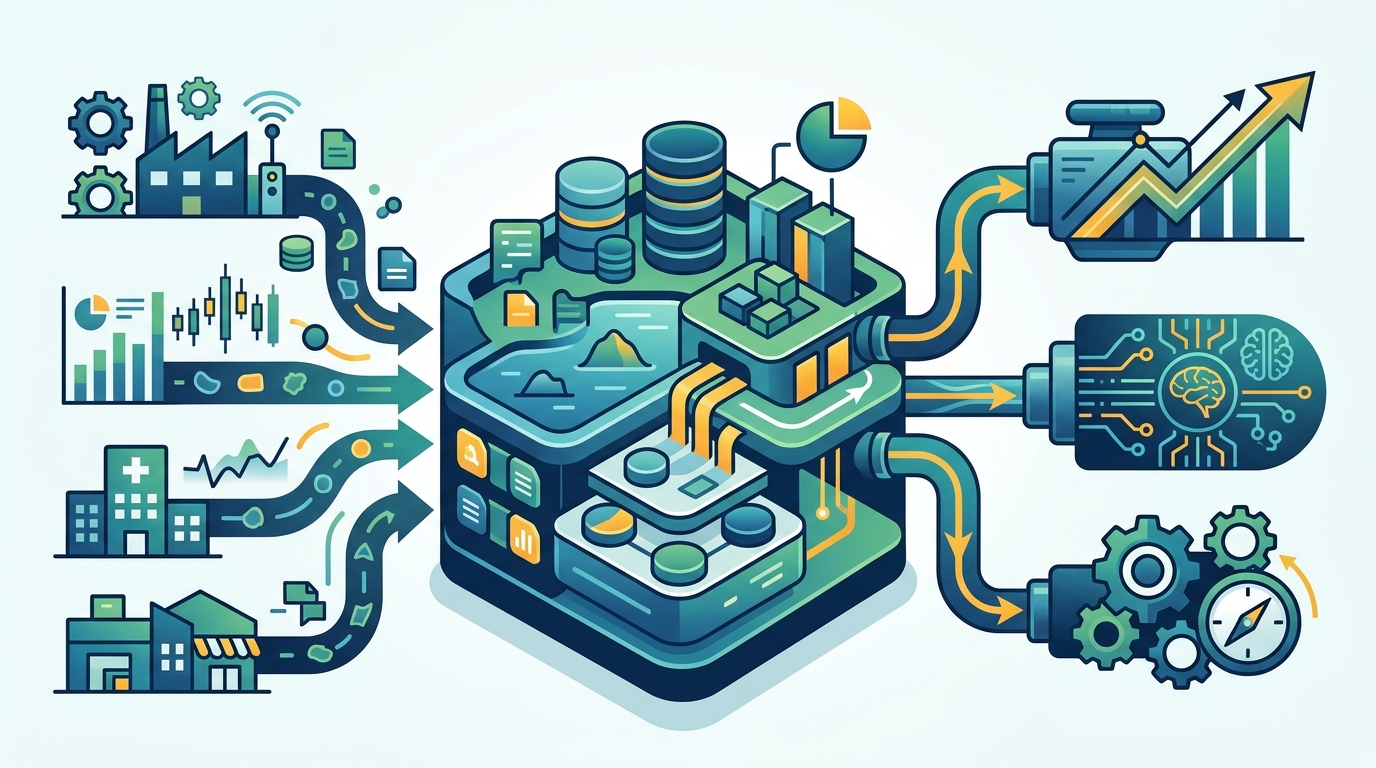
A data lakehouse is a modern data architecture that combines the best features of data lakes and data warehouses. It allows organizations to store vast amounts of structured and unstructured data in a single repository while providing the high-performance query capabilities typically associated with traditional data warehouses. This hybrid approach eliminates the need for complex data movement between separate systems.
Data lakehouse is a unified analytics platform that enables direct querying of data in its raw form without requiring prior transformation into rigid schemas. This flexibility is critical for organizations dealing with diverse data types, including logs, images, and real-time streams. By removing the silos that traditionally limit AI and analytics, businesses can unlock the full potential of their data assets.
The architecture relies on open table formats, such as Apache Iceberg, to ensure data integrity and ACID (Atomicity, Consistency, Isolation, Durability) transactions. This ensures that data remains reliable and consistent, even when accessed by multiple users or applications simultaneously. For more insights on simplifying the modern data stack, you can explore our blog post on modern data stacks.
Key Benefits for Analytics
1. Unified Data Architecture
One of the primary advantages of a data lakehouse is the unification of data engineering and data science workflows. Historically, data engineers would load data into a warehouse for reporting, while data scientists would access raw data in a lake for machine learning. This separation created bottlenecks and inconsistencies. A unified architecture allows both teams to work on the same data, reducing latency and improving collaboration.
2. Cost Efficiency
Data lakehouses leverage commodity storage, often on cloud platforms like AWS, Azure, or Google Cloud, to store data at a fraction of the cost of traditional proprietary data warehouses. According to cloud provider benchmarks, storage costs in object storage can be up to 80% lower than in traditional database appliances. This cost structure allows organizations to retain more historical data for longer periods, enabling deeper trend analysis and better model training.
3. Enhanced AI and Machine Learning Capabilities
With the rise of generative AI, the need for high-quality, diverse data has never been greater. A data lakehouse provides the necessary infrastructure to ingest and process unstructured data, such as text and images, which is essential for training advanced AI models. Acumen Velocity’s Acumen Vega Iceberg solution specifically addresses these needs by unlocking AI’s full potential through a data lakehouse powered by Iceberg.
4. Real-Time Analytics
Traditional data warehouses often struggle with real-time data ingestion due to their batch-oriented nature. Data lakehouses, however, are designed to handle streaming data efficiently. This capability enables organizations to gain predictive insights and track metrics in real time, which is crucial for industries like finance and healthcare where timing is critical.
Acumen Vega Iceberg Solution
At Acumen Velocity, we understand that data silos limit AI and analytics. Our Acumen Vega Iceberg solution is designed to help organizations unlock the full potential of their data by implementing a robust data lakehouse architecture. By leveraging Apache Iceberg, we ensure that your data is accessible, secure, and performant.
Our approach involves a comprehensive assessment of your current data landscape, followed by the design and implementation of a scalable data lakehouse. This process includes data governance, compliance, and integration strategies to ensure that your data is not only accessible but also trustworthy. For more information on our services, visit our services page.
Lakehouse vs. Traditional Warehouses
Understanding the differences between a data lakehouse and a traditional data warehouse is essential for making informed architectural decisions. The table below summarizes the key distinctions.
| Feature | Data Lakehouse | Traditional Data Warehouse |
|---|---|---|
| Data Types | Structured, Semi-structured, Unstructured | Primarily Structured |
| Storage Cost | Low (Commodity Storage) | High (Proprietary Hardware/Software) |
| Schema Enforcement | Flexible (Schema-on-Read) | Rigid (Schema-on-Write) |
| AI/ML Readiness | High (Native Support) | Low (Requires Data Movement) |
| Real-Time Processing | Yes | Limited |
While traditional warehouses offer strong governance and performance for structured data, they often require complex ETL (Extract, Transform, Load) processes to handle unstructured data. This complexity can lead to data staleness and increased operational overhead. In contrast, a data lakehouse minimizes these issues by allowing direct access to raw data.
Implementation Strategy
Implementing a data lakehouse requires a strategic approach to ensure success. Acumen Velocity follows a proven engagement model that includes assessing the current landscape, performing a data assessment, and calculating the total cost of ownership (TCO). Our process is designed to deliver powerful data solutions with precision and predictability.
We begin by evaluating your existing data infrastructure and identifying areas where a lakehouse architecture can provide the most value. This is followed by the design of a scalable data architecture that integrates with your existing systems. Our team of experts, including certified cloud architects, ensures that the implementation aligns with your business goals and regulatory requirements.
For organizations looking to migrate their legacy databases to the cloud, our Cloud Database Migration service offers a seamless transition to a modern data platform. This service ensures that your data is secure, accessible, and optimized for analytics from day one.
Key Takeaways
- A data lakehouse unifies data lakes and warehouses, supporting structured and unstructured data.
- It significantly reduces storage costs by leveraging commodity cloud storage.
- Acumen Velocity’s Acumen Vega Iceberg solution helps unlock AI potential.
- Real-time analytics capabilities enable faster, data-driven decision-making.
- Flexible schema enforcement allows for greater agility in data processing.
- Our engagement models include fixed pricing and managed services for predictable outcomes.
- CEO Mohan Gupta brings over 20 years of experience in data architecture and cloud platforms.
Frequently Asked Questions
What is the primary advantage of a data lakehouse over a data warehouse?
The primary advantage is the ability to store and analyze both structured and unstructured data in a single system, eliminating the need for complex data movement and reducing latency.
How does Acumen Velocity help with data lakehouse implementation?
We provide end-to-end services including data strategy, architecture design, and implementation, leveraging solutions like Acumen Vega Iceberg to ensure a robust and scalable foundation.
Is a data lakehouse suitable for real-time analytics?
Yes, data lakehouses are designed to handle streaming data, enabling real-time insights and predictive analytics for time-sensitive applications.
What is Apache Iceberg?
Apache Iceberg is an open table format that provides high-performance table storage for huge analytic datasets. It supports ACID transactions and schema evolution, making it ideal for data lakehouse architectures.
How does a data lakehouse support AI initiatives?
By providing direct access to diverse data types, including unstructured data, a data lakehouse enables data scientists to train more accurate and comprehensive AI models without data silos.
What are the cost benefits of a data lakehouse?
Data lakehouses typically use low-cost object storage, which can be significantly cheaper than the proprietary storage solutions used by traditional data warehouses.
Can Acumen Velocity help with cloud migration?
Absolutely. Our Cloud Database Migration service helps organizations move their legacy systems to the cloud, ensuring a smooth transition to a modern data platform.
Get Started with Acumen Velocity
Ready to transform your data infrastructure and unlock the full potential of AI? Acumen Velocity is here to help. Our team of experts is dedicated to empowering your data with AI, transforming insights into action. Contact us today to schedule a consultation and learn how we can help you achieve your business goals.
Visit our contact page to get in touch with our team. Let us help you engineer your data with precision and predictability.