

{{title}}
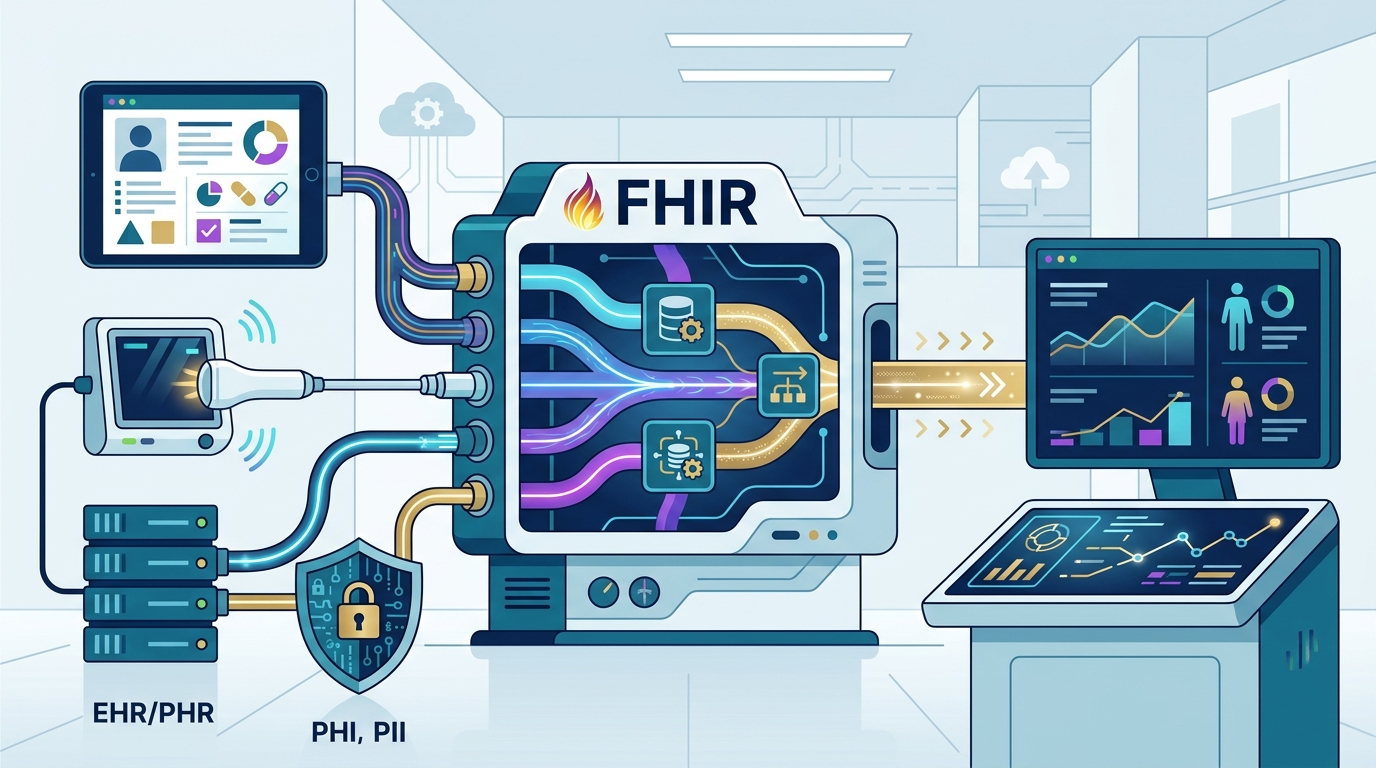
FHIR, or Fast Healthcare Interoperability Resources, is a standard for exchanging electronic health records (EHR) and healthcare information between different systems and organizations. In this ultimate guide, we'll explore how FHIR enables secure management of Protected Health Information (PHI) and Personally Identifiable Information (PII) to unlock valuable predictive insights in healthcare. (Contact us)
According to the Office of the National Coordinator for Health Information Technology (ONC), FHIR is a key component of the 21st Century Cures Act, which aims to improve interoperability and patient access to their health data. (About Us Acumen Velocity)
What is FHIR?
FHIR is a standard for exchanging healthcare information between different systems and organizations. It is based on RESTful API principles and uses JSON as the data format. FHIR provides a common language and structure for healthcare data, making it easier to share and integrate data across different systems. (Home Acumen Velocity)
FHIR in Healthcare
FHIR is increasingly being adopted in healthcare to improve interoperability and patient care. It enables seamless data exchange between different healthcare providers, payers, and patients. For instance, Acumen Velocity uses FHIR to power its healthcare solutions, providing real-time access to patient data and insights. (Home Acumen Velocity)
Security and Compliance
FHIR includes robust security and privacy features to ensure the protection of PHI and PII. It supports encryption, access control, and audit trails. FHIR is also compliant with various healthcare regulations, such as HIPAA and GDPR.
Predictive Insights
FHIR enables healthcare organizations to gain valuable predictive insights by integrating data from various sources. For example, Acumen Velocity uses FHIR to combine patient data with clinical and claims data to identify trends and patterns, helping healthcare providers make informed decisions and improve patient outcomes.
Conclusion
FHIR is a game-changer in healthcare, enabling secure management of PHI and PII to unlock valuable predictive insights. By adopting FHIR, healthcare organizations can improve interoperability, enhance patient care, and make data-driven decisions.