
Implementing a data analytics solution requires careful financial planning and technical assessment. Organizations must evaluate their current legacy systems, data volume, and desired outcomes before committing to a budget. The investment varies significantly based on complexity, infrastructure choices, and the specific tools selected for the modern data stack. A structured approach ensures that capital expenditure aligns with long-term business value and operational agility. This guide explores the core components that influence pricing and how strategic partnerships can optimize your return on investment. (Home Acumen Velocity)
Understanding Data Analytics Implementation Costs
The cost to implement a data analytics solution is rarely a fixed figure. It depends on the scope of the project, the maturity of your existing data ecosystem, and the level of customization required. Organizations often underestimate the hidden costs associated with data cleansing, integration, and change management. A successful implementation begins with a clear understanding of business goals and the technical requirements needed to achieve them.
Acumen Velocity emphasizes that data strategy and consulting are foundational to controlling costs. By aligning technical execution with business objectives, organizations avoid spending resources on features that do not drive value. This alignment ensures that every dollar spent contributes directly to operational efficiency and decision-making capabilities. Engaging with experts early in the process helps identify potential pitfalls and establishes a realistic budget framework.
For organizations exploring how artificial intelligence can enhance their data initiatives, reviewing detailed insights on modern approaches can provide valuable context. You can learn more about these strategies by visiting our blog post on how AI empowers your data. This resource highlights the transformative potential of integrating advanced analytics with existing workflows.
Key Drivers That Influence Project Pricing
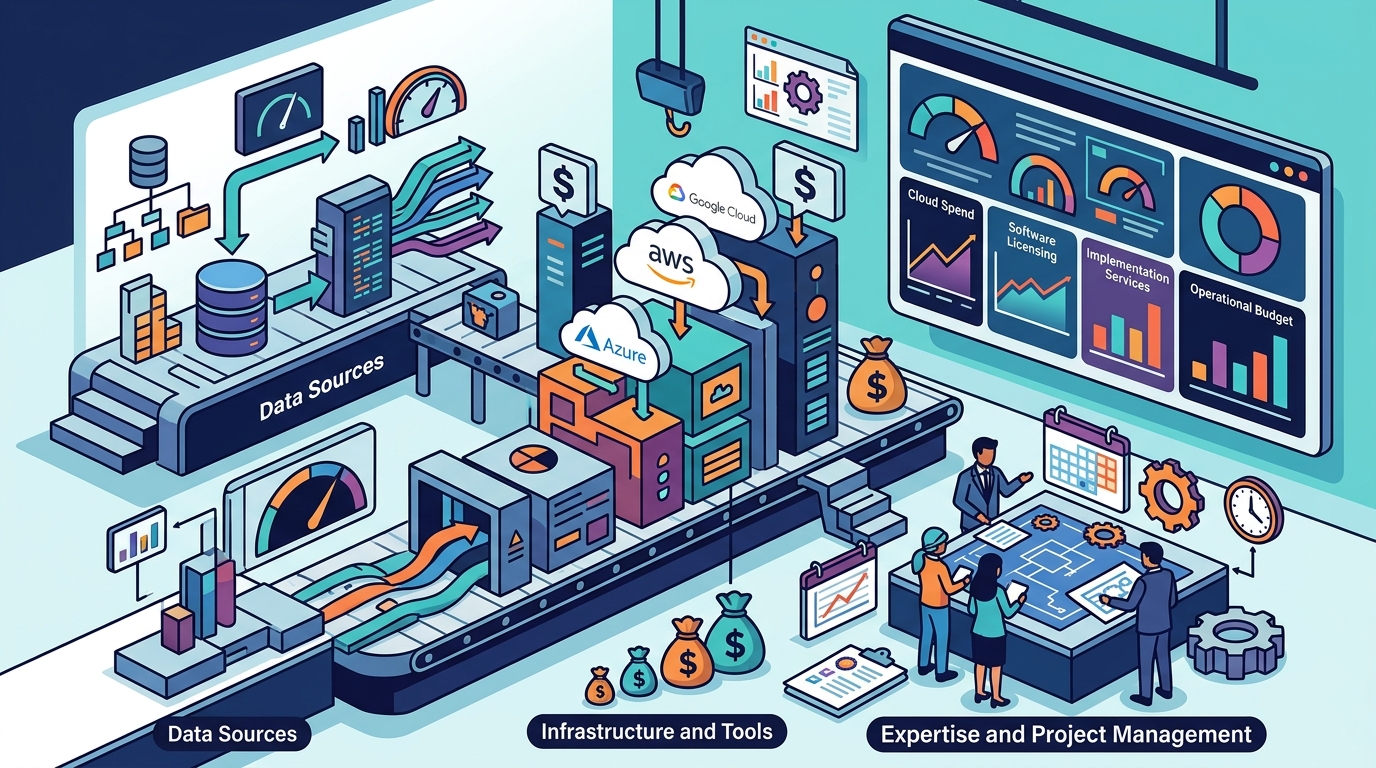
Several factors directly impact the total cost of ownership for a data analytics project. Data volume and complexity are primary drivers. Large datasets require robust storage solutions and processing power, which can increase infrastructure costs. The number of data sources that need to be integrated also plays a significant role. Each additional source adds complexity to the integration layer and requires specialized engineering effort.
Regulatory compliance and security requirements add another layer of cost. Organizations in regulated industries must implement strict data governance protocols to protect sensitive information. Data governance is the comprehensive framework that ensures data quality, security, and compliance across the organization. Implementing robust governance mechanisms requires dedicated tools and ongoing oversight, which must be factored into the budget.
Customization levels also affect pricing. Off-the-shelf solutions may offer lower upfront costs but often require extensive configuration to meet specific business needs. Custom-built solutions provide greater flexibility but demand higher initial investment in development and testing. The choice between these approaches depends on the organization's long-term strategic goals and technical capabilities.
The Role of Data Strategy and Consulting
Investing in professional consulting services can significantly reduce long-term costs by preventing costly mistakes. A well-defined data strategy ensures that the implementation roadmap is realistic and achievable. Consultants help organizations assess their current data maturity and identify gaps that need to be addressed before implementation begins.
Acumen Velocity offers comprehensive Data Strategy & Consulting services to help organizations develop robust data strategies aligned with business goals. This service includes assessing current infrastructure, defining data architecture, and establishing governance frameworks. By partnering with experienced consultants, organizations can ensure that their implementation plan is grounded in best practices and industry standards.
Effective consulting also involves workforce planning. Organizations must determine whether to build internal capabilities or rely on external expertise. This decision impacts the overall budget and the timeline for achieving business value. A balanced approach that combines internal knowledge with external expertise often yields the best results.
Infrastructure and Cloud Migration Expenses
Infrastructure costs represent a significant portion of the total implementation budget. Organizations must decide between on-premises, public cloud, or hybrid environments. Each option has distinct cost implications regarding hardware, maintenance, and scalability. Cloud-based solutions often offer lower upfront costs and greater flexibility, while on-premises solutions may provide better control over data security.
Migrating legacy databases to the cloud requires careful planning and execution. Cloud Database Migration involves transferring data from legacy systems to modern cloud platforms while ensuring data integrity and minimal downtime. This process requires specialized tools and expertise to avoid data loss or corruption. Acumen Velocity provides custom cloud migration solutions that ensure a seamless transition to modern infrastructure.
Data silos are a common challenge that can increase implementation costs. When data is scattered across multiple systems, integration becomes complex and expensive. A unified data architecture can help reduce these costs by providing a single source of truth. Data lakehouse is a unified architecture that combines the flexibility of data lakes with the management features of data warehouses. This approach simplifies data management and reduces the need for multiple redundant systems.
For organizations looking to simplify their technology stack, exploring modern data stack solutions can provide valuable insights. You can read more about this topic by visiting our blog post on simplifying the modern data stack. This resource discusses how modern architectures can reduce complexity and improve operational efficiency.
Specialized Solutions and Licensing Models
Specialized solutions often require additional licensing fees and customization efforts. Organizations must evaluate the total cost of ownership, including software licenses, maintenance, and support. Subscription-based models may offer lower upfront costs but can accumulate significant expenses over time. Perpetual licenses require higher initial investment but may be more cost-effective in the long run.
Acumen Velocity offers specialized solutions such as the Acumen Translation Hub (ATH), a software-as-a-service solution available on Google Cloud Marketplace. This AI-powered tool supports multilingual translation and can be integrated into existing workflows to enhance global operations. Licensing costs for such solutions depend on usage volume and feature requirements.
Other specialized solutions include Document AI for finance operations, FHIR Implementation for healthcare, and Generative AI Solutions for customer experience enhancement. Each solution addresses specific industry needs and may require additional integration efforts. Organizations must carefully evaluate the business value of each solution against its implementation cost.
Healthcare organizations face unique challenges when implementing data analytics solutions. Managing protected health information (PHI) and personally identifiable information (PII) requires strict security measures. FHIR is a healthcare interoperability standard that enables the secure exchange of electronic health information. Implementing FHIR-compliant solutions ensures that organizations can leverage AI for predictive insights while maintaining regulatory compliance.
Workforce and Operational Considerations
Workforce costs are a critical component of the implementation budget. Organizations must decide whether to hire internal staff, contract external experts, or use a combination of both. Building an internal data team requires significant investment in recruitment, training, and retention. Contracting external experts provides immediate access to specialized skills but may be more expensive on an hourly basis.
Acumen Velocity provides Workforce Solutions to help organizations connect top talent with their specific needs. This service ensures that organizations have the right expertise to execute their data strategy effectively. By leveraging workforce solutions, organizations can accelerate their implementation timeline and reduce the risk of project delays.
Operational costs also include ongoing maintenance, monitoring, and optimization. Data analytics solutions require continuous management to ensure they deliver value over time. Organizations must budget for regular updates, security patches, and performance tuning. A proactive approach to maintenance helps prevent costly downtime and ensures that the solution remains aligned with evolving business needs.
| Cost Driver | Description | Impact on Budget |
|---|---|---|
| Data Strategy & Consulting | Aligns technical execution with business goals to prevent waste. | High strategic value, reduces long-term costs. |
| Cloud Database Migration | Transfers legacy data to modern cloud platforms securely. | Significant upfront investment, scalable long-term. |
| Specialized Solutions | Includes ATH, Document AI, FHIR, and Generative AI tools. | Variable licensing and customization costs. |
| Workforce Solutions | Connects organizations with top talent for execution. | Impacts timeline and expertise quality. |
Key Takeaways
- Implementation costs vary based on data volume, complexity, and integration requirements.
- Data strategy and consulting are essential for aligning technical execution with business goals.
- Cloud database migration requires careful planning to ensure data integrity and minimal downtime.
- Specialized solutions like ATH and FHIR address specific industry needs and compliance requirements.
- Workforce solutions help organizations access the expertise needed for successful implementation.
- Operational costs include ongoing maintenance, monitoring, and optimization efforts.
- Partnering with experienced providers like Acumen Velocity can optimize budget allocation and outcomes.
Frequently Asked Questions
What factors determine the cost of a data analytics implementation?
The cost is determined by data volume, complexity, integration requirements, infrastructure choices, and the level of customization needed. Regulatory compliance and security requirements also add to the total investment.
How does data strategy consulting impact implementation costs?
Data strategy consulting helps organizations avoid costly mistakes by aligning technical execution with business goals. It ensures that resources are allocated efficiently and that the implementation plan is realistic and achievable.
What are the benefits of cloud database migration?
Cloud database migration offers scalability, flexibility, and reduced infrastructure maintenance costs. It enables organizations to leverage modern cloud services and improve operational agility.
How do specialized solutions affect the overall budget?
Specialized solutions may require additional licensing fees and customization efforts. Organizations must evaluate the total cost of ownership, including software licenses, maintenance, and support, to determine the impact on the budget.
What role do workforce solutions play in implementation?
Workforce solutions help organizations connect with top talent to execute their data strategy effectively. They ensure that organizations have the right expertise to achieve their business objectives and accelerate implementation timelines.
How can organizations manage ongoing operational costs?
Organizations can manage operational costs by implementing proactive maintenance, monitoring, and optimization practices. Regular updates, security patches, and performance tuning help prevent costly downtime and ensure long-term value.
What is the importance of data governance in implementation?
Data governance ensures data quality, security, and compliance across the organization. It establishes frameworks and protocols that protect sensitive information and support regulatory requirements.
How does Acumen Velocity support cost-effective implementations?
Acumen Velocity provides comprehensive services including data strategy, cloud migration, and specialized solutions. Their customer-oriented service model fosters long-lasting partnerships and drives repeat business by delivering exceptional results.
Get Started With Your Data Strategy
Implementing a data analytics solution is a significant investment that requires careful planning and execution. By understanding the key cost drivers and partnering with experienced providers, organizations can optimize their budget and achieve their business objectives. Acumen Velocity offers a comprehensive suite of services to help organizations leverage data and AI to drive success.
Contact us today to discuss your data readiness and explore how our solutions can transform your insights into action. Visit our contact page to schedule a consultation with our experts. Learn more about our mission and vision by visiting our about us page. Unlock the full potential of your data with Acumen Velocity.