

How FHIR Standardization Improves Healthcare Data Consistency
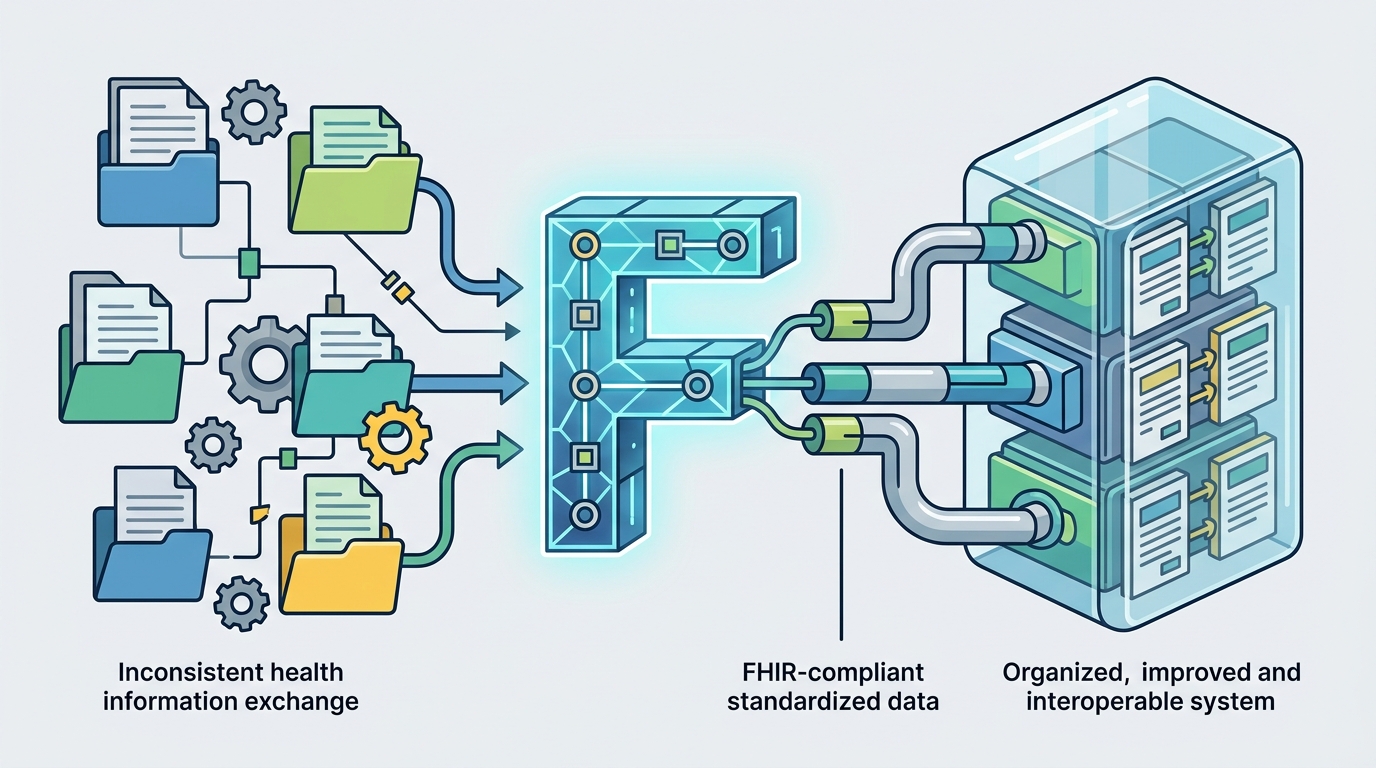
FHIR standardization improves data consistency by enforcing a unified, API-based structure for health information exchange. This approach eliminates fragmented data silos, ensuring that clinical records remain accurate and interoperable across diverse healthcare systems. Acumen Velocity supports this transformation by integrating FHIR-compliant APIs into modern data architectures. according to Health Level 7
The Structural Foundation of FHIR
Fast Healthcare Interoperability Resources (FHIR) is a widely used application programming interface (API)-focused standard used to represent and exchange health information. Developed by the standards development organization HL7, FHIR natively aligns with how electronic health records (EHRs) exchange data in routine clinical workflows. This alignment offers a significant opportunity to improve data availability for measurement and analysis. By adopting a standardized resource model, organizations can ensure that data elements such as patient demographics and clinical observations are structured identically across different platforms.
Eliminating Data Silos Through Interoperability
Healthcare data is often trapped in isolated systems, leading to inconsistencies and redundant records. FHIR addresses this by providing a common language for data exchange. When systems communicate via FHIR APIs, they can share information seamlessly without complex, custom-built integrations. This reduces the risk of data corruption during transfer. For example, a hospital system can exchange patient history with a specialist clinic using standard FHIR resources, ensuring that both parties view the same clinical facts. according to FHIR Fast Healthcare
Enhancing Data Quality and Governance
Standardization is a critical component of data governance. FHIR provides a framework for defining data quality metrics and validation rules. By adhering to these standards, healthcare organizations can identify and correct inconsistencies before they impact patient care. Acumen Velocity emphasizes that a robust data strategy must include strong governance practices to ensure compliance and reliability. Implementing FHIR allows teams to monitor data lineage and track changes over time, which is essential for maintaining trust in clinical data.
Accelerating AI and Analytics Readiness
Consistent data is the foundation for advanced analytics and artificial intelligence. When health data is standardized using FHIR, it becomes easier to aggregate and analyze at scale. This enables healthcare organizations to develop predictive models and gain insights from large datasets. The FHIR ecosystem supports the creation of multiple downstream impacts across healthcare and scientific domains. By ensuring data consistency, organizations can unlock the full potential of their data assets for innovation and improved patient outcomes.
Key Takeaways
- FHIR is an API-focused standard that ensures consistent representation of health information.
- Standardization reduces data silos and improves interoperability between healthcare systems.
- Adopting FHIR supports robust data governance and quality management.
- Consistent data structures are essential for successful AI and analytics initiatives.
- Acumen Velocity helps organizations implement FHIR-compliant solutions for secure data exchange.
Frequently Asked Questions
What is FHIR in healthcare?
FHIR is a standard developed by HL7 for exchanging health information over the internet using APIs.
How does FHIR improve data consistency?
FHIR enforces a unified structure for data elements, ensuring that information is represented consistently across different systems.
Why is data consistency important in healthcare?
Consistent data ensures accurate clinical decisions, reduces errors, and supports effective analytics and AI applications.
Can FHIR be used with existing EHR systems?
Yes, FHIR is designed to integrate with existing EHR systems, facilitating seamless data exchange.
How does Acumen Velocity support FHIR implementation?
Acumen Velocity provides expert guidance and tailored solutions for implementing FHIR-compliant APIs and data architectures.