
Enterprises are increasingly migrating legacy infrastructure to the cloud to reduce operational overhead and enhance scalability. According to recent industry reports, over 90% of large organizations now utilize a multi-cloud strategy to mitigate vendor lock-in and optimize performance. This shift is not merely a trend but a fundamental restructuring of how data is stored, processed, and secured. Organizations must navigate a complex landscape of providers, each offering distinct advantages in compute power, storage efficiency, and AI integration. Understanding these differences is critical for aligning technical capabilities with business objectives. (About Us Acumen Velocity)
Understanding Enterprise Cloud Needs
Before selecting a platform, enterprises must define their specific workload requirements. This involves assessing data volume, processing speed, and regulatory constraints. Data silos limit AI and analytics, making a unified architecture essential for modern businesses. The goal is to transform insights into action by ensuring that data is accessible, secure, and analyzable across all departments. (Home Acumen Velocity)
Acumen Velocity emphasizes that a robust data strategy must be aligned with business goals. This alignment ensures that technical investments directly contribute to revenue growth and operational efficiency. Enterprises often struggle with legacy systems that hinder agility. By adopting a structured comparison framework, organizations can identify gaps in their current infrastructure and select a platform that supports future growth.
Key Cloud Providers Overview
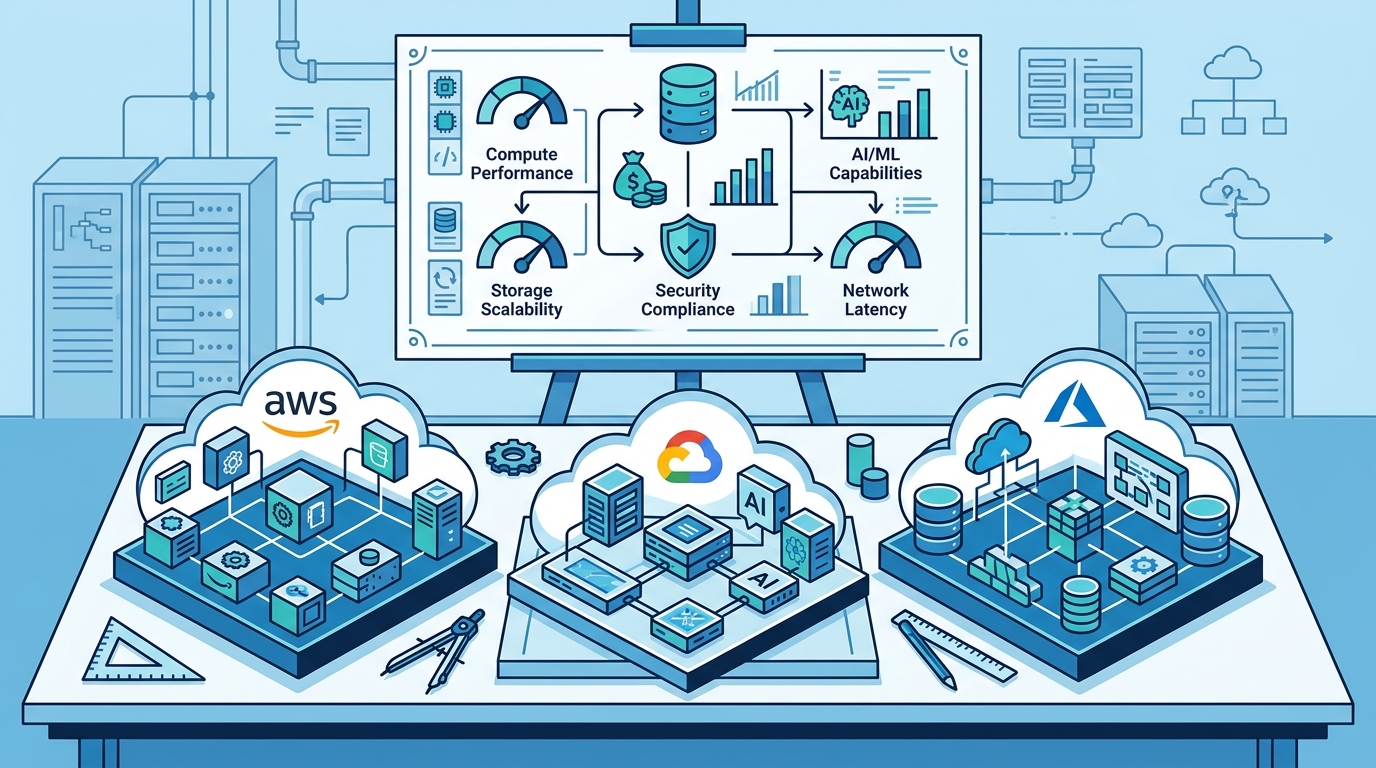
The major cloud providers each have distinct strengths. Google Cloud Platform (GCP) is renowned for its data analytics and AI capabilities. Amazon Web Services (AWS) offers the broadest range of services and global infrastructure. Microsoft Azure integrates seamlessly with existing Microsoft enterprise environments, making it a preferred choice for many corporations.
When evaluating these providers, it is important to look beyond marketing claims. Real-world performance metrics, such as latency, uptime, and data transfer costs, play a significant role in the final decision. According to market analysis, the choice of cloud provider often dictates the success of digital transformation initiatives. Organizations must consider not just the current state but the future roadmap of each platform.
Comparing Data Architecture Capabilities
Data architecture is the backbone of any cloud strategy. Modern enterprises require scalable data lakehouses that can handle both structured and unstructured data. Acumen Vega Iceberg is an example of a solution designed to unlock the full potential of data by breaking down silos. This approach allows for real-time analytics and predictive insights.
Cloud Database Migration is a critical component of this process. Moving legacy databases to the cloud requires careful planning to ensure data integrity and minimal downtime. Acumen Velocity offers custom cloud migration solutions that help organizations transition smoothly. This includes assessing the current landscape, performing data assessments, and calculating the total cost of ownership (TCO).
| Feature | Google Cloud Platform | AWS | Microsoft Azure |
|---|---|---|---|
| Data Analytics | BigQuery, Dataflow | Redshift, EMR | Synapse Analytics |
| AI/ML Tools | Vertex AI | SageMaker | Azure Machine Learning |
| Integration | Native Google Services | Extensive API Ecosystem | Microsoft 365 Integration |
| Security | Zero Trust Model | Shared Responsibility | Compliance Center |
Security and Compliance Standards
Security is a paramount concern for enterprises handling sensitive data. Data Governance & Compliance services are essential to establish frameworks that meet regulatory requirements. This includes ensuring that data is protected against unauthorized access and that privacy standards are strictly adhered to.
For healthcare organizations, FHIR Implementation is crucial for managing PHI and PII securely. This allows for the secure exchange of health information while maintaining patient privacy. Similarly, Document AI solutions help automate finance operations by extracting and analyzing data from documents, ensuring accuracy and compliance.
Quality Assurance & Security services ensure the integrity and reliability of cloud systems. This involves regular audits, penetration testing, and continuous monitoring. Enterprises must choose providers that offer robust security features and compliance certifications relevant to their industry.
Cost Optimization Strategies
Cloud costs can escalate quickly if not managed properly. Engaging in a thorough data assessment helps calculate the current TCO and identify areas for optimization. Acumen Velocity’s engagement models, including Fixed Pricing and Managed Time & Material, provide flexibility for different budgetary needs.
Fixed Pricing offers predictable costs for powerful data solutions, which is ideal for projects with well-defined scopes. Managed Time & Material provides flexibility for evolving requirements, allowing teams to adapt as needs change. End-to-End Managed Services offer proactive support, ensuring that operations run smoothly without constant oversight.
By leveraging these engagement models, enterprises can control costs while achieving their data goals. It is important to regularly review cloud usage and adjust resources to match actual demand. This proactive approach prevents waste and ensures that every dollar spent contributes to business value.
Integration and AI Readiness
Artificial Intelligence is transforming how enterprises operate. Generative AI Solutions enhance customer experience and operational efficiency through AI-driven chatbots and enterprise search. Organizations must ensure their data infrastructure is ready to support these advanced applications.
Acumen Translation Hub (ATH) is a software-as-a-service solution available on Google Cloud Marketplace. It supports AI-driven translation and localization, enabling global businesses to communicate effectively. This highlights the importance of choosing a platform that supports diverse AI workloads.
Workforce Solutions also play a role in cloud adoption. Connecting top talent with organizations helps fuel agility and competitiveness. By building a skilled team, enterprises can better leverage cloud technologies and drive innovation.
Key Takeaways
- Multi-cloud strategies are becoming the norm for large enterprises to optimize performance and reduce risk.
- Data architecture must support both structured and unstructured data to enable effective AI and analytics.
- Security and compliance are non-negotiable, requiring robust governance frameworks and regular audits.
- Cost optimization requires continuous monitoring and the use of flexible engagement models.
- AI readiness depends on the quality and accessibility of underlying data infrastructure.
- Cloud Database Migration should be planned carefully to ensure data integrity and minimal downtime.
- Partnering with experts like Acumen Velocity can accelerate the transformation journey.
Frequently Asked Questions
What is the best cloud platform for data analytics?
Google Cloud Platform is often considered the best for data analytics due to its powerful BigQuery and AI capabilities. However, the best choice depends on specific enterprise needs and existing infrastructure.
How can enterprises reduce cloud costs?
Enterprises can reduce costs by optimizing resource usage, leveraging reserved instances, and using engagement models like Fixed Pricing for predictable expenses. Regular data assessments are also crucial.
What is Acumen Vega Iceberg?
Acumen Vega Iceberg is a data lakehouse solution designed to unlock the full potential of data by breaking down silos and enabling AI-driven insights.
Why is data governance important in cloud migration?
Data governance ensures that data is managed securely and complies with regulatory requirements. It establishes frameworks that protect sensitive information and maintain data quality.
How does Acumen Velocity support cloud migration?
Acumen Velocity offers custom cloud migration solutions, including data assessment, TCO calculation, and implementation of proof of concepts to ensure a smooth transition.
What are the benefits of a multi-cloud strategy?
A multi-cloud strategy reduces vendor lock-in, enhances resilience, and allows organizations to choose the best services from different providers for specific workloads.
Is AI integration complex for legacy systems?
AI integration can be complex, but solutions like Acumen Translation Hub and Generative AI tools simplify the process by providing pre-built, scalable services.
Next Steps for Your Cloud Journey
Transforming your enterprise data strategy requires expertise and a clear plan. Acumen Velocity is dedicated to helping organizations unlock the full potential of their data. Contact us now for your data readiness assessment and discover how we can help you achieve business success. Visit our Contact page to schedule a consultation.